
Last updated November 22, 2026
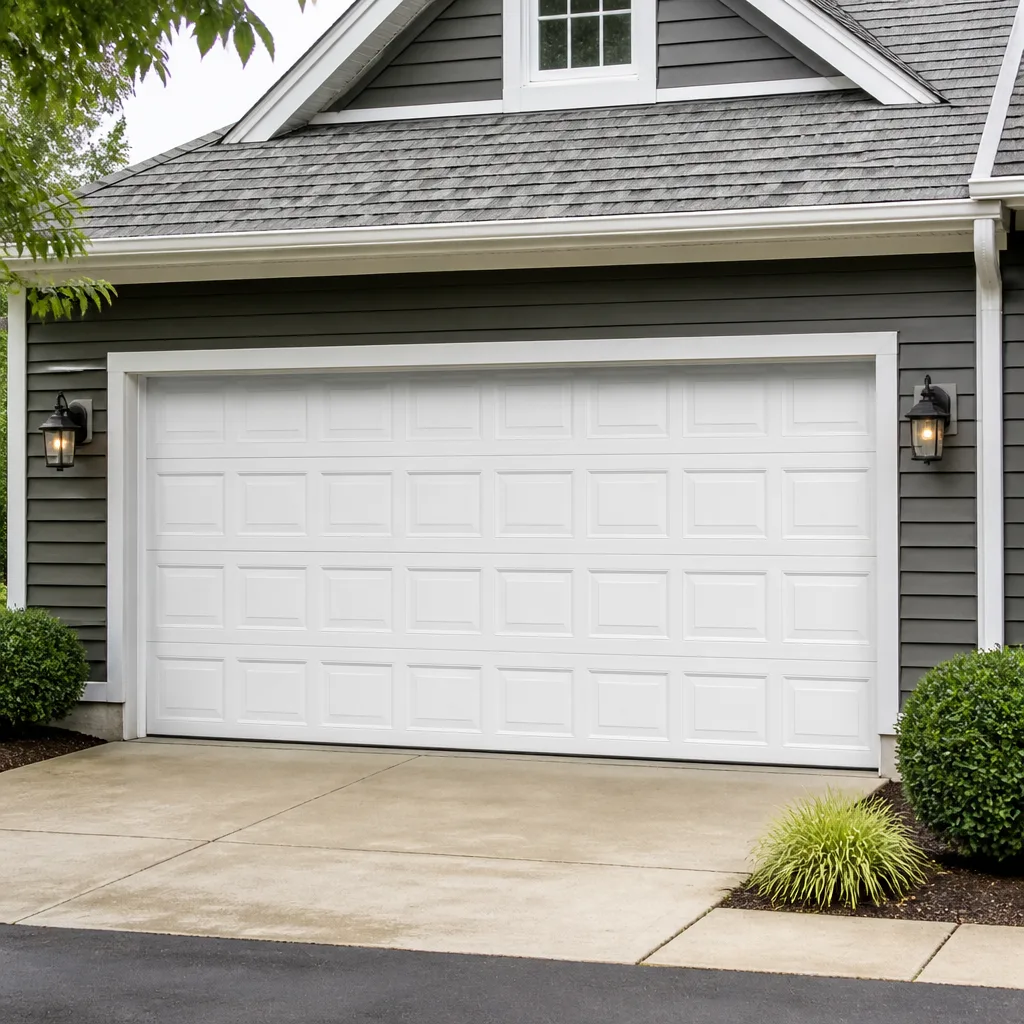 Raised-panel steel
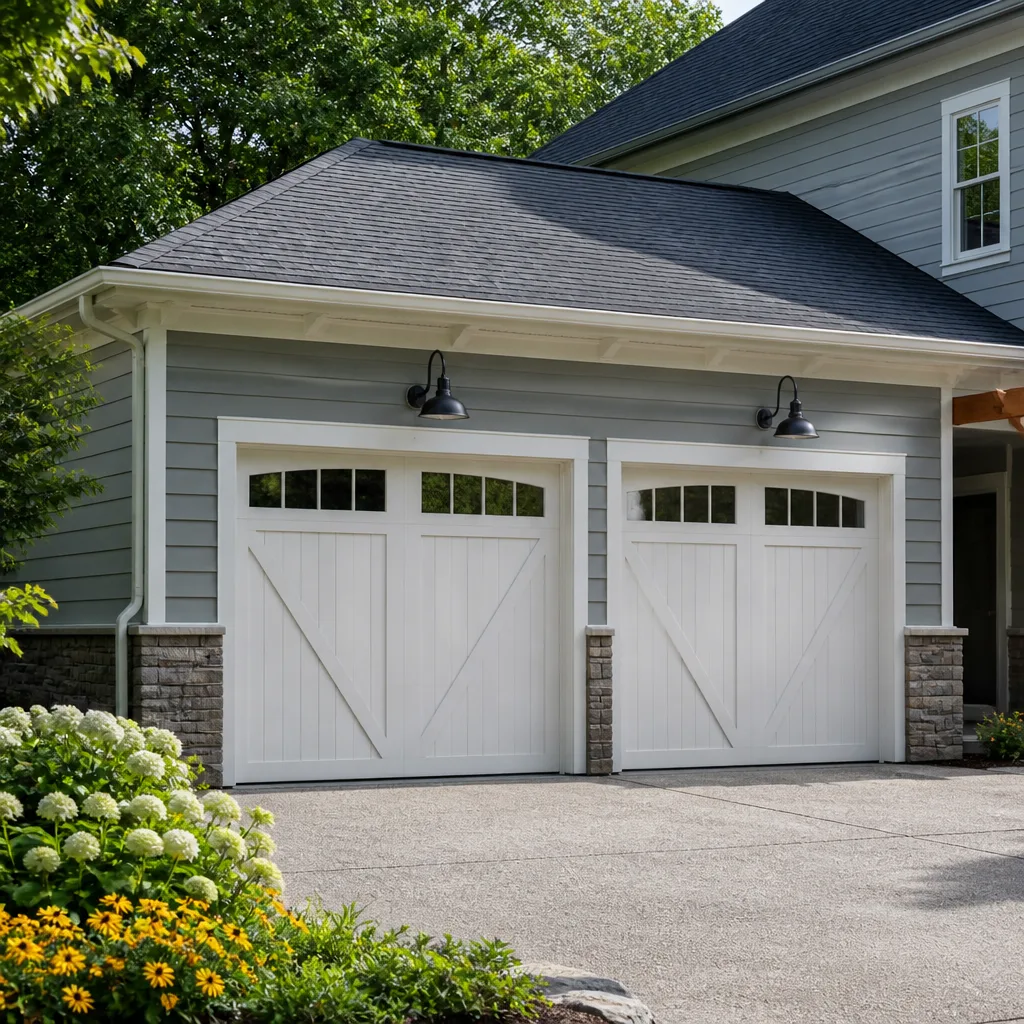 Carriage house
 Modern flush
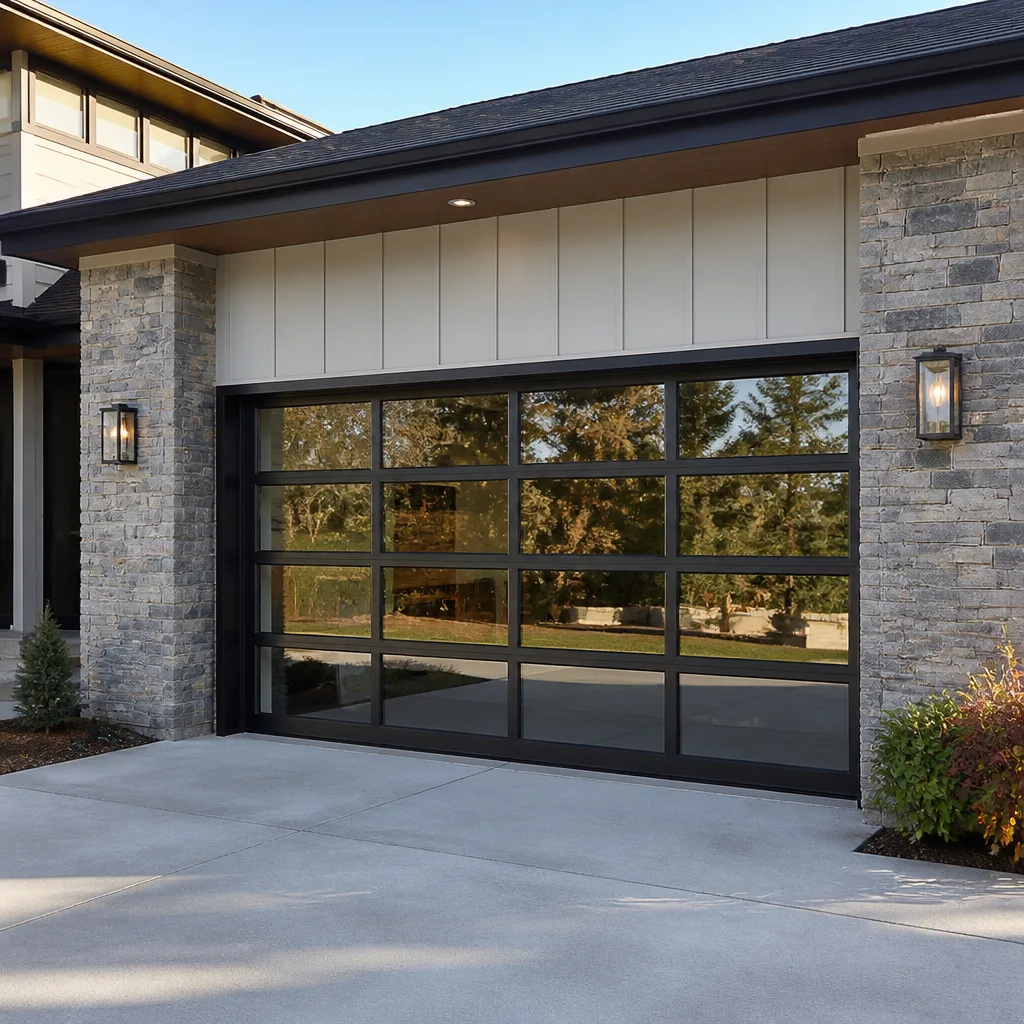 Full-view glass
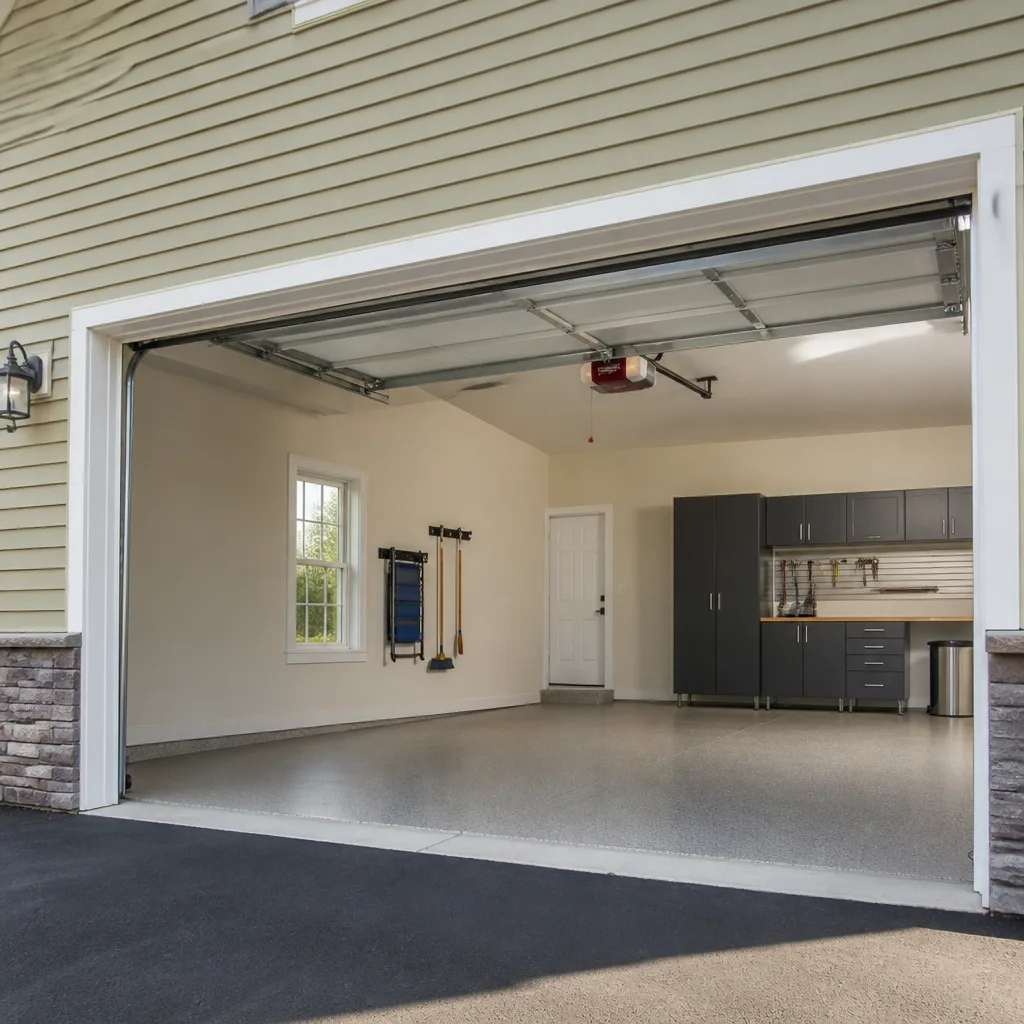 LiftMaster openers
 Chamberlain openers
Full 25-point door and opener safety check with every visit - springs, cables, rollers, tracks, and your LiftMaster or Chamberlain opener included
You get a price before we start. It does not change when the pro arrives.
Get your free estimateGarage Door Permits, Codes & Inspections in Crystal Lake, IL: What You Need to Know
Most Crystal Lake homeowners assume a garage door swap is permit-free. It’s an easy assumption to make, since the work happens fast and nobody’s asking to see paperwork at the curb. But the day before a closing, a title search can turn up an open violation for unpermitted garage work, and suddenly the project you finished years ago is holding up your sale. This guide covers when Crystal Lake actually requires a permit for garage door work, what Illinois fire-separation rules mean for the wall between your house and an attached garage, what inspectors really look at during a permitted installation, and why HOA approval in Crystal Lake’s planned communities runs alongside a city permit rather than replacing it.
Quick Answer
In Crystal Lake, a like-for-like garage door replacement (same size, same opening, same type) usually doesn’t need a building permit, but a new opening, an added garage door, a wall change, or a door between an attached garage and living space almost always does. Illinois fire-separation rules apply to that shared wall, so a replacement door in that location is judged harder than a standard exterior door. HOA approval in Crystal Lake’s planned communities is a separate step and does not substitute for a city permit when one is required. When in doubt, call the Crystal Lake Building Department before you buy a door.
Styles & brands we work with
- Raised-panel steel
- Carriage house
- Modern flush
- Full-view glass
- LiftMaster openers
- Chamberlain openers
Table of Contents
- When Does Garage Door Work Need a Permit in Crystal Lake?
- Illinois Fire-Separation Rules and the Garage-to-House Wall
- What Crystal Lake Inspectors Actually Look At
- HOA Approval in Crystal Lake’s Planned Communities
- What Unpermitted Garage Work Means for Insurance
- The Permit Process Step by Step
- Do Spring and Opener Repairs Need a Permit?
- Common Mistakes to Avoid
When Does Garage Door Work Need a Permit in Crystal Lake?
The permit line in Crystal Lake is drawn at structural change, not at the door itself. Replacing a door in the same opening at the same size, with the same framing and header, is treated as maintenance by most municipalities and rarely triggers a permit. Change the opening, the size, the type, or the number of doors, and you’re in permit territory. There’s a simple test you can run before calling a single contractor: does the wall, the header, the opening, or the number of doors change? If yes, plan on a permit. If no, you’re probably fine, but confirm with the city before you order a custom door from Clopay or Amarr.
The reason this matters more than it sounds is that a garage door is one of the few exterior changes that touches the structural envelope of the home. A new opening in a load-bearing wall is a framing job, and framing is exactly what a building department exists to inspect. A like-for-like swap is a mechanical change to a door and its tracks, and that usually falls outside the structural scope. Between those two poles, here’s the general rule of thumb:
- Like-for-like replacement (same size, same opening): usually no permit; confirm with the Crystal Lake Building Department.
- Enlarging or shrinking an existing opening: typically needs a permit; header and framing may be affected.
- Adding a new garage door where none existed: almost always needs a permit.
- Converting a garage to living space, or back: needs a permit and an inspection.
- Replacing a door between an attached garage and living space: judged against fire-separation rules; ask the city.
- Swapping a garage door opener: generally mechanical, generally no permit.
We can’t stress this next part enough: the rules in Crystal Lake are enforced by the Crystal Lake Building Department, not by us, not by any garage door company, and not by a general contractor. We can tell you what usually triggers a permit in Crystal Lake, but the city has the final word. Make one phone call to the building department before you order a door. It’s a five-minute conversation that can save you a paperwork headache years later. If you’d rather start with a quote on the door itself, our garage door repair team can walk your situation before you spend a dollar.
Illinois Fire-Separation Rules and the Garage-to-House Wall
Here’s the piece that catches Crystal Lake homeowners off guard: a garage door on its own is exterior work, but a door between an attached garage and living space is treated as part of a firewall. Illinois Residential Code Section R302 covers fire separation between a garage and a dwelling, and it exists for a simple reason. Cars, gasoline, and lawn equipment live in garages, and a fire that starts there has to be slowed from reaching the bedroom above the garage. The door in that shared wall is part of the separation assembly, which means it can’t be swapped casually the way a front door can.
For an attached garage, R302 generally requires the wall between garage and living space to resist fire for a set period, and openings in that wall must be protected accordingly. In plain terms, that means the door between the garage and the house should be a fire-rated door that self-closes and self-latches. A hollow-core or non-rated door is a problem no matter how recently it was hung. When you replace that door, you’re not just upgrading a door; you’re maintaining a fire-separation component the code treats as critical. Ask your contractor to confirm the door is rated for the application, and don’t assume a standard interior door will pass.
A few practical points for Crystal Lake homeowners with an attached garage:
- The number of garage doors on the outside of the house doesn’t change R302. The rule applies to the interior door between the garage and the dwelling.
- Self-closing hardware is part of the assembly. Springs, closers, and latches get checked, not just the door panels.
- Drywall on the shared wall matters. The wall between garage and living space is part of the separation, and drywall type and thickness can come up during inspection.
- An inspection is usually required when that door or its wall is changed. Ask the city how they want the work documented.
- Use a door listed for the application. A rated door carries a label; a cheap standard interior door doesn’t.
We’ve seen plenty of homes in Crystal Lake where a prior owner swapped that interior door for something that looked fine and wasn’t rated. It’s not something an inspector catches until a sale or a remodel pulls the paperwork. If you’re shopping for a new exterior garage door from Raynor or a comparable brand, ask your contractor to flag whether the interior fire door should be upgraded at the same time. It’s a cheap fix now and an expensive one during a closing.
What Crystal Lake Inspectors Actually Look At
To be clear: nobody inspects a routine spring replacement or a like-for-like door swap on an exterior opening. Inspection happens when the work is permitted. When a Crystal Lake inspector does show up for a permitted garage door installation, they aren’t grading the door’s color or testing every open-and-close cycle by hand. They’re looking at the relationship between the door and the structure around it, plus the life-safety systems that keep the door from causing an injury. Here’s what they’re generally reviewing:
- The opening and framing. Is the header sized to carry the load over the new opening, are the jambs plumb, and does the rough opening match what was approved?
- Attachment to the structure. Are the tracks and header brackets fastened into framing rather than just drywall or sheathing?
- The door’s rated assembly, when applicable. For a door between garage and living space, is the door labeled for the application and does it self-close and self-latch?
- The opener’s safety reverse. With the door in the down position and a test object in the path, does the door reverse as it should? A LiftMaster or Chamberlain opener with a working safety eye is the baseline; an opener with a bypassed or missing eye is a fail.
- The spring and cable assembly. Are the springs mounted on a rated center bearing plate or bracket, are cables and drums intact, and is the door balanced so it doesn’t run away under its own weight if a spring lets go?
- Weather sealing and separation. Does the door close to the floor without a gap, and are the bottom seal and perimeter seals installed?
- The permit and plan compatibility. Does the finished work match what was submitted on the permit application?
Crystal Lake is a lake town, and doors on the south and west faces of a house take the brunt of summer storms rolling in over the water. Inspectors aren’t grading storm exposure, but they do look at whether the tracks and jamb are straight and whether the door seals tight, because a warped jamb shows up fast in a lake climate. If your opener is old, a permitted installation is also a good moment to replace it so you go into the inspection with a modern safety reverse. Our team handles garage door opener repair regularly and can tell you in one visit if the opener is going to be the reason the inspection comes back with a punch list.
HOA Approval in Crystal Lake’s Planned Communities
Crystal Lake has a large share of homes in planned communities and subdivisions, and in those neighborhoods the HOA approval process runs in parallel to the city permit, not instead of it. Homeowners frequently mix this up. They assume that if the HOA signed off on the door, the city doesn’t care, or that if the city permitted the work, the HOA is satisfied. Neither is true. A city permit says the installation meets code; an HOA approval says the door design matches the architectural standards of the neighborhood. They’re separate processes with separate reviewers and separate timelines, and you need both when both apply.
In practice, HOA architectural review is about appearance and consistency, and it can be stricter than the city on things a building inspector won’t touch:
- Door style. Raised-panel vs. carriage-house vs. flush panel; the HOA cares more than you’d expect.
- Material. Steel, aluminum, wood, and composite can all be permitted differently by the HOA.
- Color. Even a good door in the wrong shade can get bounced by an architectural committee.
- Window placement and design. Whether the door has windows, and where they sit on the panel, is a common requirement.
- Opener noise or visibility. Some HOAs weigh in on exterior opener hardware, though this is less common.
The practical order for a Crystal Lake homeowner is this: check the HOA requirement first, then the city, then order the door. That order matters because the door you choose may need to be approved by both. If the HOA wants a specific carriage-house style from a Clopay or Amarr catalog, get that in writing before you order, because custom doors are often non-returnable. A written approval from the HOA plus a written approval from the city is your green light. Skipping the HOA step and installing anyway is a common way to end up repainting or replacing a door you already paid for.
What Unpermitted Garage Work Means for Insurance
Unpermitted garage work isn’t automatically uncovered, and this is where a lot of scary internet advice goes wrong. Most standard homeowner policies don’t have a clause that says “unpermitted work voids all coverage.” What they have is a claims review process, and unpermitted work can complicate that review in ways that cost you money. Insurance is about whether the work was done correctly and by qualified trades, and a missing permit is a signal an adjuster can use to ask harder questions.
Here’s what Crystal Lake homeowners should understand without any alarmism:
- Coverage for a fire that starts in the garage. If the fire is traced to faulty garage door or opener wiring that was never inspected, the insurer may look closely at the whole installation and could reduce or deny a portion of the claim. It’s not automatic; it’s a question.
- Structural claims around the garage opening. If the framing of a new opening fails and there’s no permit or inspection record, the insurer will likely ask why the work wasn’t documented, and the burden of proof sits with the homeowner.
- Fire-separation failure and the R302 interior door. If a fire moves from the garage into the house past a non-rated interior door, the claims adjuster will want to know why that door wasn’t rated and whether the swap was ever inspected. This is the highest-risk version of unpermitted work.
- Sale-time disclosure. Illinois requires seller disclosure of known material defects and unpermitted work, and a title search can surface open permits. A buyer’s lender may not fund a sale on a home with open permits, which is the scenario from the opening of this guide.
- Open permits on record. A permit that was opened and never properly closed stays on record. Having it closed out is often simpler than you’d think, but it’s a phone call you don’t want to be making the day before a closing.
We’re not an insurance company, and we can’t speak to how a specific policy will respond to a specific claim. What we can say is that when a permitted installation is done, the record is clean, the work was inspected, and there’s no ambiguity to argue over with an adjuster. The permit is cheap insurance on the insurance. If you’re not sure whether prior work on your house was permitted, the Crystal Lake Building Department can tell you what’s on record for your address, and that’s a reasonable first phone call before any new project.
The Permit Process Step by Step
For a project that does require a permit, the process in Crystal Lake usually follows a predictable sequence. Timelines vary by workload at the city, and we don’t promise specific days on a permit because the schedule is the city’s to set, not ours. What we can do is tell you the order of operations so you know what’s coming and nothing stalls on your side. This is the sequence most permitted garage door installations follow:
- Confirm the scope. Decide whether the work is like-for-like (usually no permit) or a structural change (permit required). The building department has the final word.
- Check HOA requirements first. Get the HOA’s architectural approval in writing before ordering a door that might not be returnable.
- Apply for the permit. The application usually asks for the scope, a plan or drawing of the new opening, and the contractor information. The Crystal Lake Building Department can tell you exactly what they want.
- Order the door once approved. Custom door lead times run weeks on a Clopay or Amarr order, and the permit timeline doesn’t shorten that. Order after approval, not before.
- Install, then call for inspection. The inspector is typically looking for framing, attachment, fire-rated assemblies, and safety reverse on the opener.
- Close out the permit. Get the inspection signed off and keep the paperwork. This is the document that saves you at closing.
For a full replacement of a door on the exterior envelope (no wall change, no new opening), we usually don’t need to do any of this, and installation can be scheduled directly. If you’re moving from a repair to a new door, our garage door repair page covers the repair side of the house, and our installation team can talk you through what to expect on the new-door side. The order of operations above applies to permitted work only. For a like-for-like swap, the process shrinks to a phone call and a scheduled day.
Do Spring and Opener Repairs Need a Permit?
Spring and opener repairs generally don’t need a permit in Crystal Lake, because they’re mechanical work on an existing fixture rather than a structural change. Replacing a torsion spring, swapping a broken opener, replacing a roller, or rebalancing a door doesn’t affect the framing or the structure of the garage, so the building department usually isn’t involved. The one exception is when the spring or opener repair is part of a larger permitted installation; then it’s covered by the same permit and inspected as part of the same job.
What spring work does need, permit or not, is a trained professional. A torsion spring on a residential garage door is under heavy tension, and the tension is stored energy even when the door is closed. A spring under tension can cause serious injury if it’s handled without the right tools and procedure, and the danger is real, not theoretical. This is why spring repair deserves its own category rather than being lumped in with a generic repair. If your spring is broken, don’t attempt to open the door by force to inspect it, don’t try to unwind a spring by hand, and don’t use the door until a technician has been out. Our garage door spring repair team handles this as a specific service because it’s a specific hazard, and we’d rather see it done safely than see a homeowner hurt trying to save a repair call.
Openers are a lighter category of risk but still involve electrical connections and a door that can move with force. If your opener is a LiftMaster or Chamberlain with a built-in battery backup, a straight replacement is a mechanical job, but the safety reverse has to be set correctly after installation or the door can come down on a person or a car. A Genie or Craftsman opener retrofit on an older door can also force a spring adjustment, which puts you back in spring territory. The rule we use is simple: if the job touches the door’s mechanical assembly or the spring, it’s professional work. If it’s a new opener on a healthy door, it’s still worth having a specialist install it so the safety reverse gets set correctly.
Common Mistakes to Avoid
- Assuming a like-for-like swap is unpermitted just because the door size didn’t change. A door between an attached garage and living space still has to meet fire-separation rules, and a door replacement might need an inspection even when the exterior door doesn’t. Call the Crystal Lake Building Department before you order.
- Skipping the HOA and going straight to the city. In Crystal Lake’s planned communities, the HOA approval is a separate requirement, and the city permit doesn’t satisfy it. Do the HOA step first, in writing, before you order a custom door.
- Ordering a custom door before the permit is approved. If the design gets pushed around in review, you can be stuck with a non-returnable door. Get the approval first, then order.
- Swapping a fire-rated interior door for a standard one. The door between the garage and the house is part of the fire-separation assembly. It needs to be rated, self-closing, and labeled. A hollow-core door in that opening is a code problem and a safety problem.
- Opening the door on a broken spring to “see if it’s really broken.” A torsion spring under tension is a serious hazard. Don’t force the door, and don’t try to unwind the spring. Wait for a technician.
- Letting a permit lapse with the work unfinished. An open permit stays on record and can complicate a sale. When the work is done, get the inspection signed off and close the permit.
- Bypassing the opener’s safety eye to “fix” a door that keeps reversing. The reversing feature is a safety device, not a glitch. A door that reverses on its own needs a proper diagnosis, not a disabled sensor.
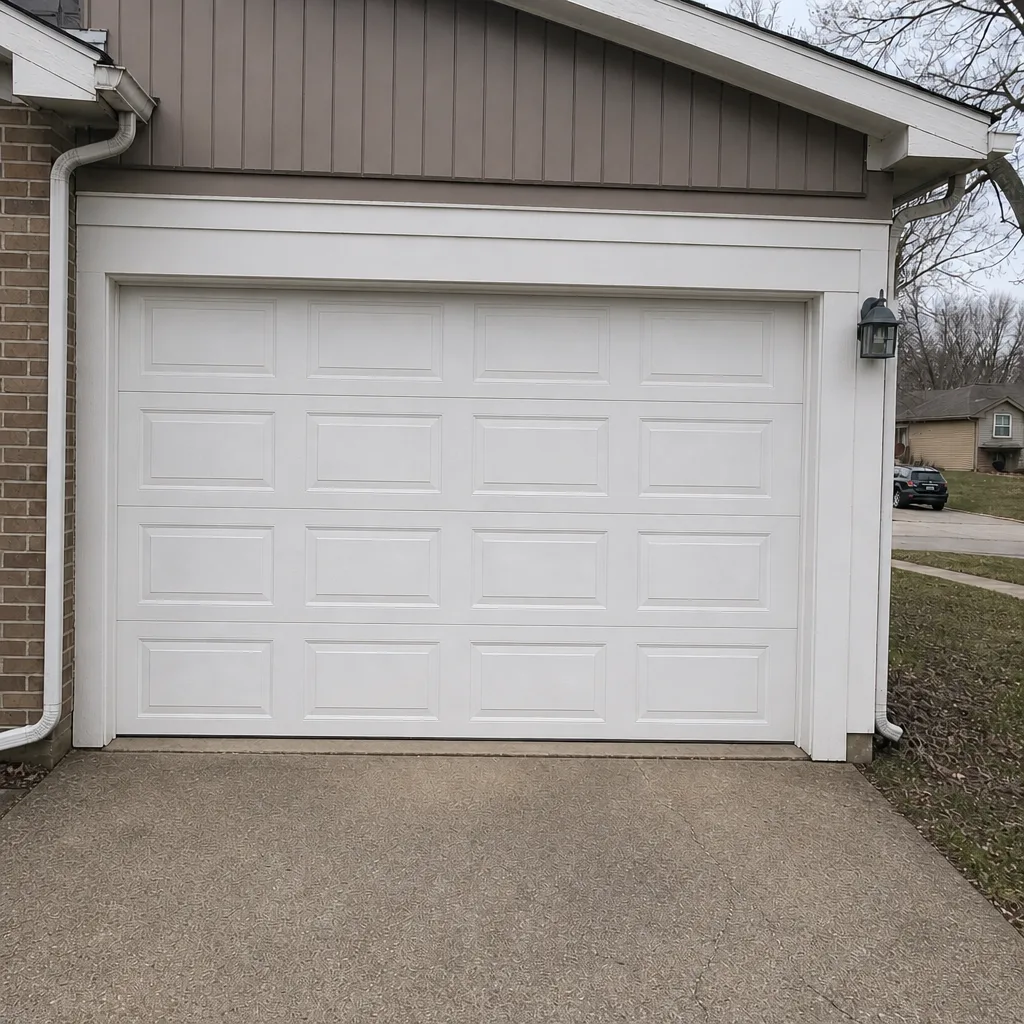
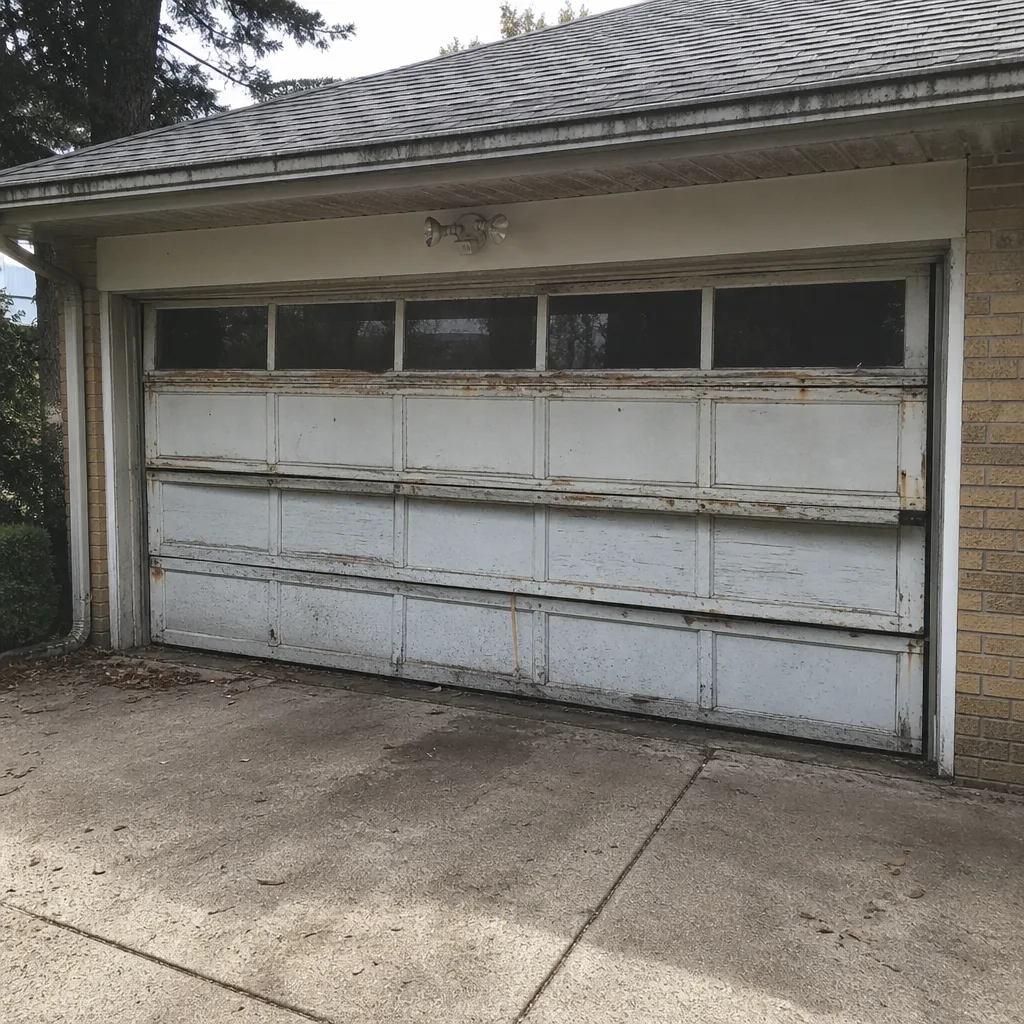
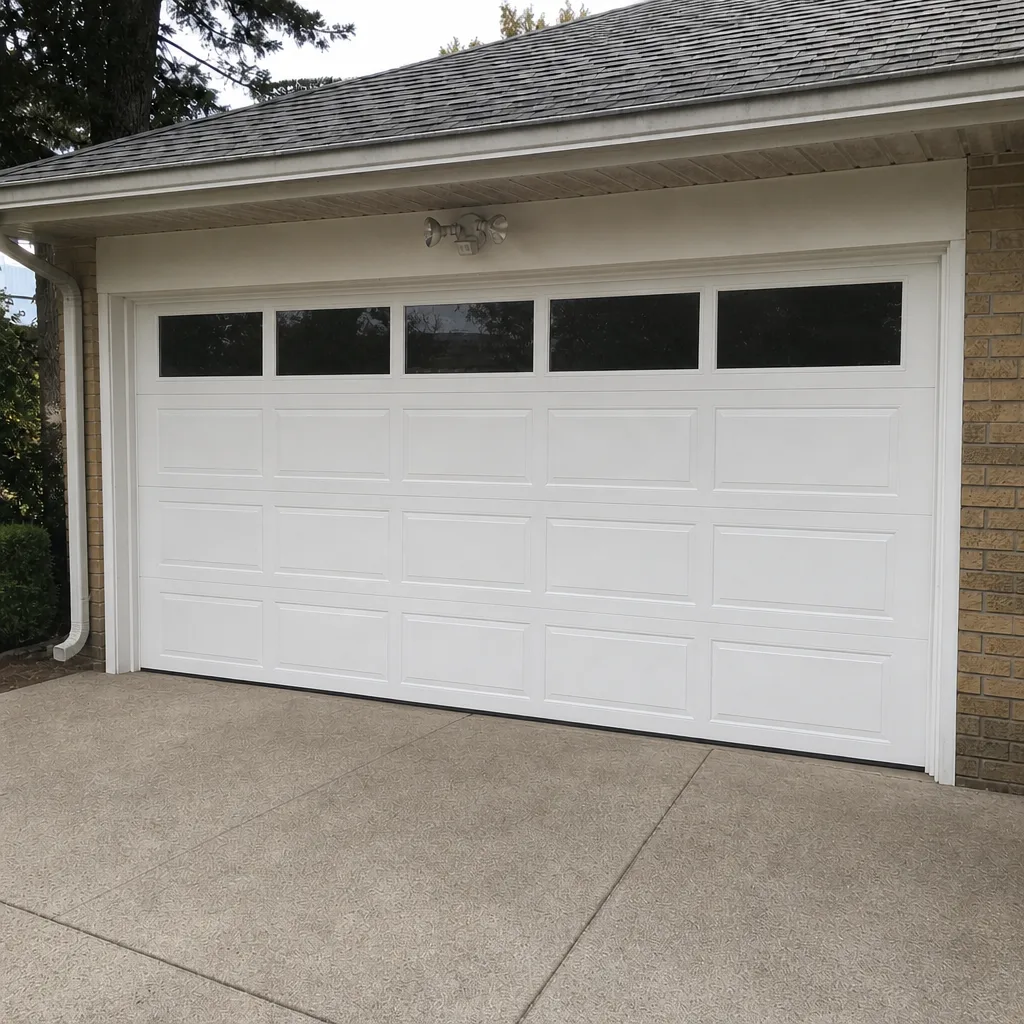
See the difference
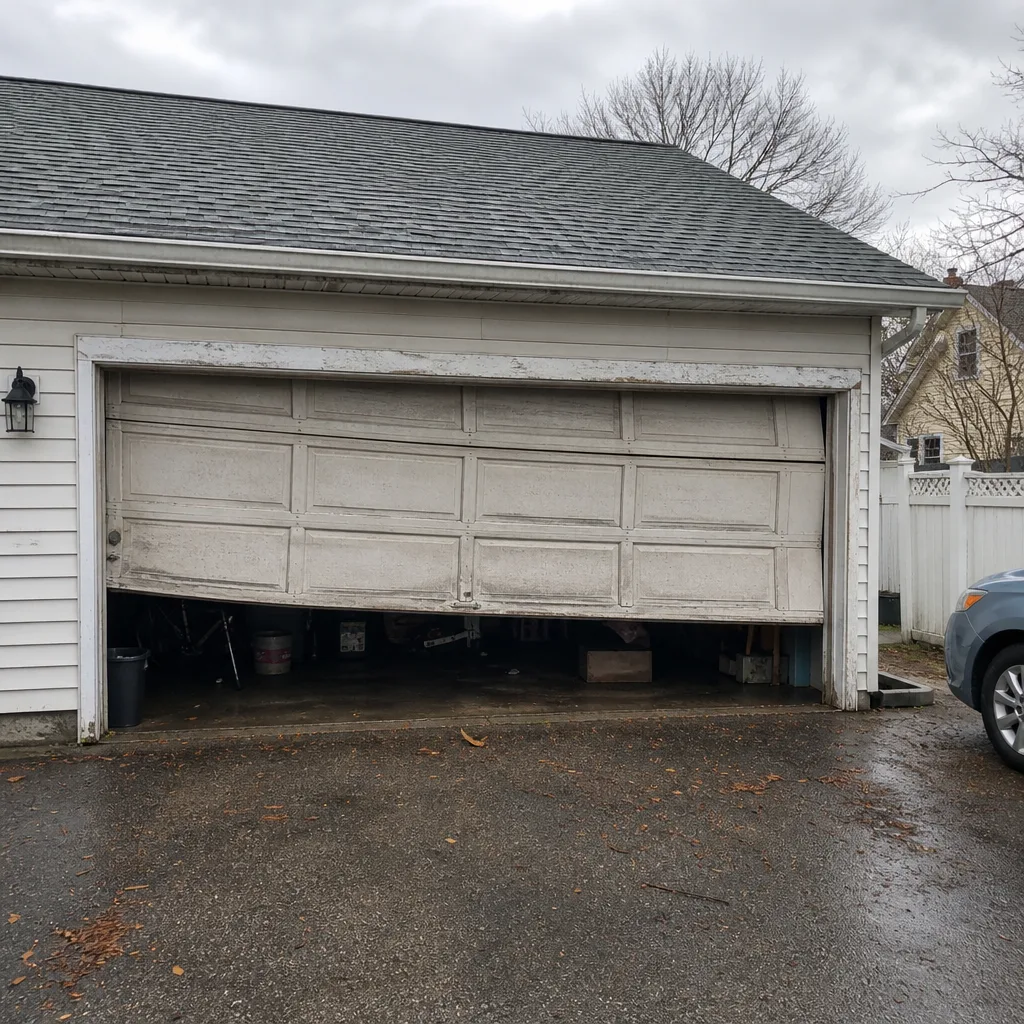 Before
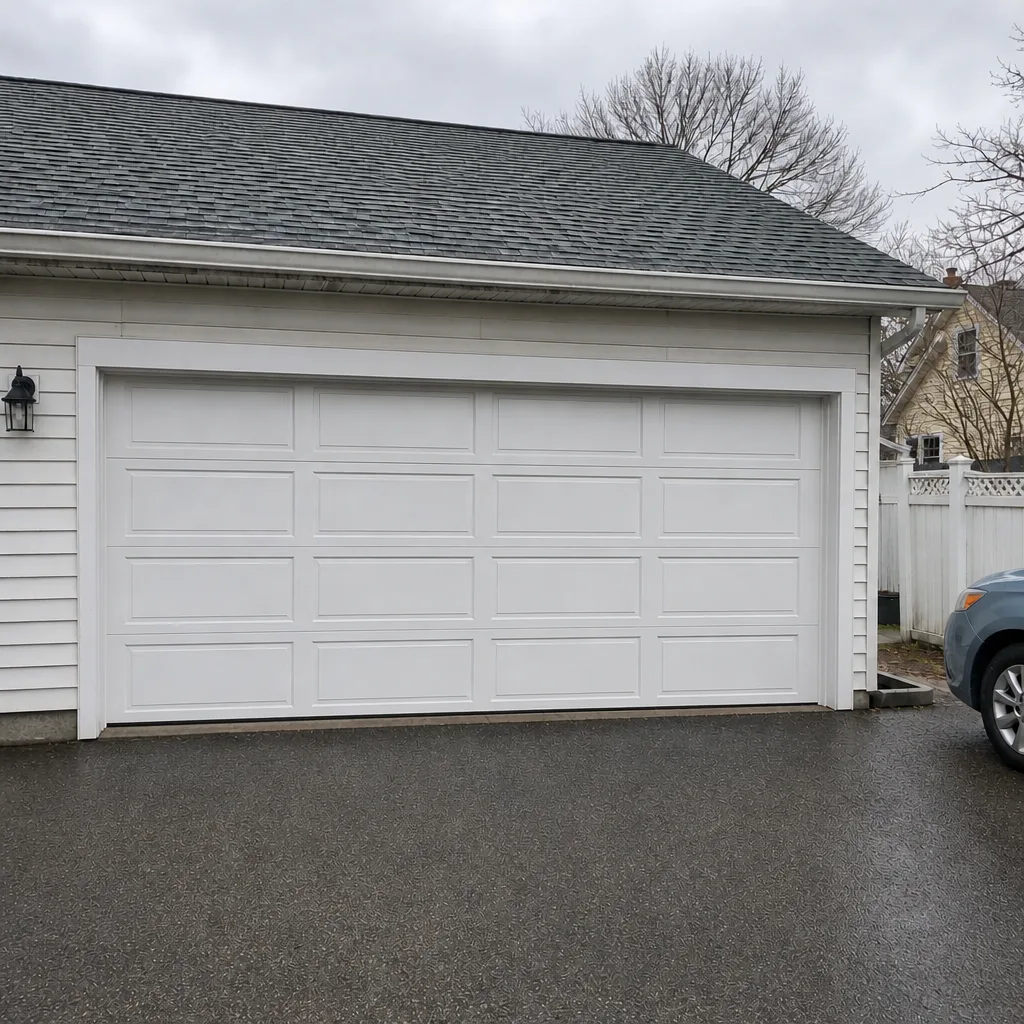 After
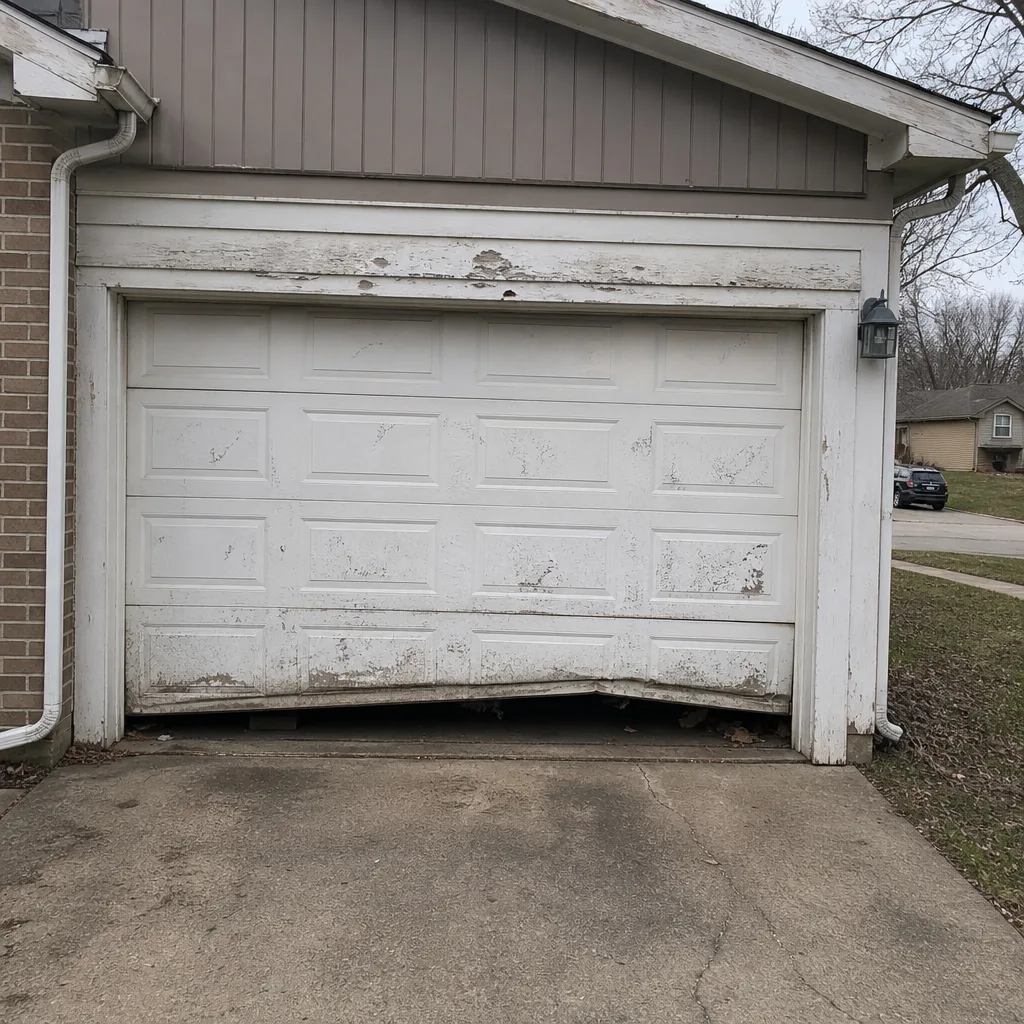 Before
 After
 Before
 After
When to Call a Professional
Call a professional when the door won’t open or close, when the spring makes a loud bang or the door suddenly feels heavy, when the opener reverses on its own or the safety eye is flashing, and when the door is sagging or dragging on one side. Call before you replace a door between the garage and the house, because that door is part of a fire-separation assembly that has to be rated and inspected. And call before you break out a saw or a wrench if you aren’t sure whether a permit is needed, because a licensed contractor can usually answer that question in one visit. Crystal Lake Garage Door Repair Pros offers free estimates in Crystal Lake. Call (844) 493-4287. We answer 24/7. Fast dispatch from 7am to 7pm, Sunday through Friday. Our technicians have up to 13 years of experience, we’re factory-familiar with 8 major brands including LiftMaster, Chamberlain, Genie, Clopay, Amarr, Wayne Dalton, Craftsman, and Raynor, and we quote the price and agree it before any work starts. Estimates are free.
Frequently Asked Questions
A like-for-like garage door replacement in Crystal Lake usually doesn’t need a building permit, but a new opening, an enlarged opening, an added door, or a door between an attached garage and living space generally does. The Crystal Lake Building Department has the final word on your specific address, so confirm before ordering a door. Also remember that Crystal Lake’s planned communities may require HOA architectural approval in addition to, not instead of, a city permit. Call (844) 493-4287 for an exact quote on the door; estimates are free.
Illinois Residential Code Section R302 covers fire separation between a garage and the dwelling, including the door between an attached garage and living space. That door is part of the fire-separation assembly, so it needs to be a rated, self-closing, self-latching door, not a standard interior door. When that door is replaced, it may need to be inspected. If you have an attached garage in Crystal Lake and you’re replacing that interior door, ask the Crystal Lake Building Department how they want it documented. Call (844) 493-4287 to schedule a free estimate on the exterior garage door, and we’ll flag the interior door at the same visit.
A Crystal Lake inspector generally looks at the framing and header of the opening, the attachment of tracks and brackets into the structure, the fire-rated status of a garage-to-house door where applicable, the safety reverse of the opener, and the condition of the spring and cable assembly. The work has to match what was submitted on the permit. Weather sealing and separation also come up. The inspector isn’t grading door color or evaluating the door’s cosmetic details, but a warped jamb and a bypassed safety eye will show up. Call (844) 493-4287 for a free measure and a written price before you pull a permit; estimates are free.
No. HOA approval and a city permit are separate processes that often both apply to the same garage door replacement in Crystal Lake’s planned communities. The HOA handles appearance, style, color, and material standards; the city handles code and structure. A door that clears one can still fail the other, so get HOA architectural approval in writing before ordering a custom door. If you’re not sure which applies at your address, start by calling your HOA and the Crystal Lake Building Department. Then call (844) 493-4287 for a free estimate; estimates are free.
Unpermitted garage work doesn’t automatically void your homeowner’s insurance, but it can complicate a claims review and slow down a home sale. A title search can surface an open permit, a lender may refuse to fund a sale over one, and an insurer can ask harder questions about unpermitted structural or fire-separation work. The general fix is to call the Crystal Lake Building Department, find out what’s on record for your address, and have any open permit properly closed. We can’t speak for your insurer, but a permitted installation gives you a clean record with nothing to argue over. Call (844) 493-4287 for a free estimate before you start; estimates are free.
Spring and opener repairs generally don’t need a permit in Crystal Lake, because they’re mechanical work on an existing fixture and don’t change the structure. A new opening, a changed opening, or a garage-to-house door replacement is a different story and may need a permit and an inspection. Spring work still needs a trained technician regardless, because a torsion spring under tension is a serious hazard. Don’t force the door or try to unwind a spring yourself. Call (844) 493-4287 to book a spring or opener visit; estimates are free.
The Bottom Line
The permit question in Crystal Lake hinges on a single test: does the work change the structure or the fire separation between the garage and the house? A like-for-like door replacement usually doesn’t. A new opening, an enlarged opening, a door between an attached garage and living space, or anything touching the framing almost always does, and Illinois Residential Code Section R302 means that shared-wall door is held to a fire-rated standard. HOA approval in Crystal Lake’s planned communities runs alongside the city permit, not instead of it. Unpermitted work doesn’t automatically void insurance, but it can cost you at a claims review or a closing. Get the paperwork right, and the door becomes the easy part.
If you’re ready to move from paperwork to a door, our team is one call away. Crystal Lake Garage Door Repair Pros handles repair, installation, spring repair, opener repair, and emergency service, and garage doors are all we do. Our technicians have up to 13 years of experience and work on your brand, whether you have a LiftMaster, Chamberlain, Genie, or Raynor system. We quote the price and agree it before any work starts, and the written estimate sets the final price. Call (844) 493-4287 today for a free estimate. We answer 24/7. Fast dispatch from 7am to 7pm, Sunday through Friday. For more on how we work and what we cover, start at Crystal Lake Garage Door Repair Pros.
Written by the team at Crystal Lake Garage Door Repair Pros.