
Last updated November 22, 2026
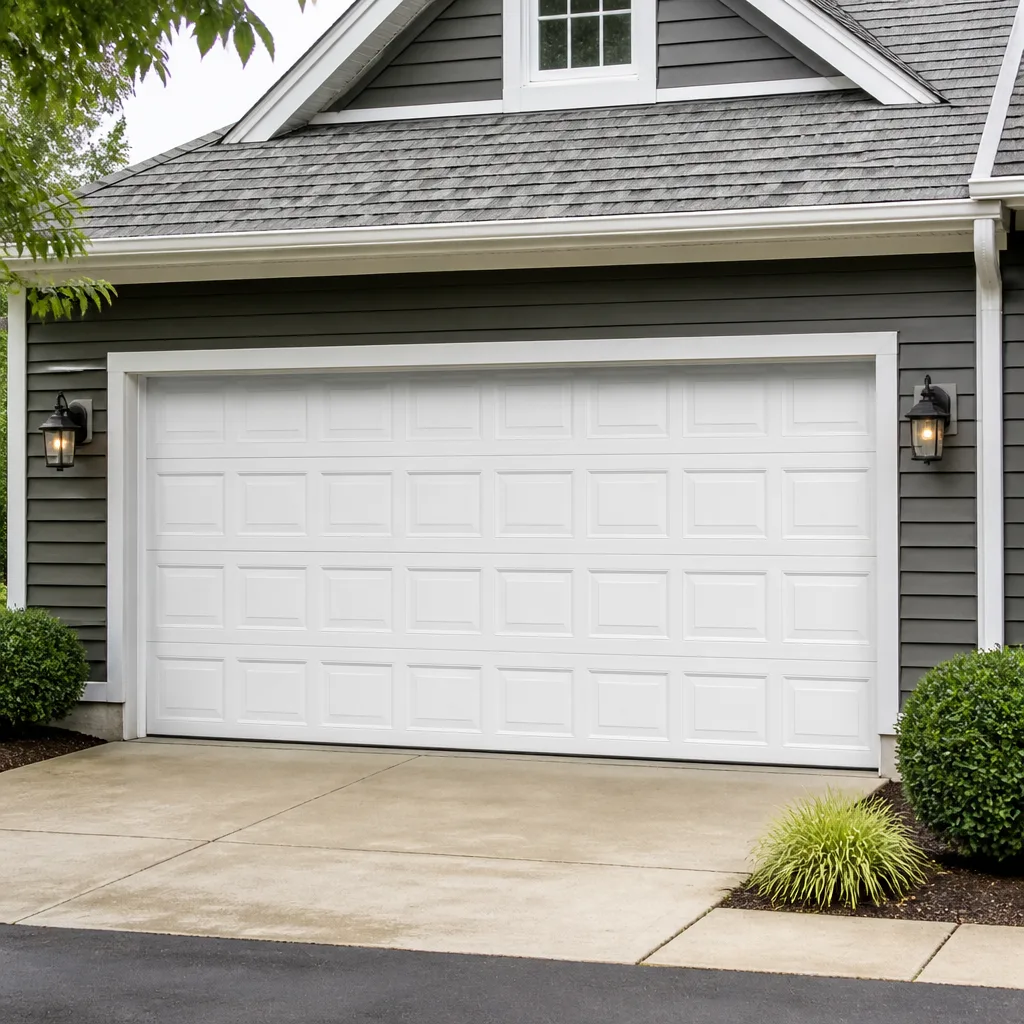 Raised-panel steel
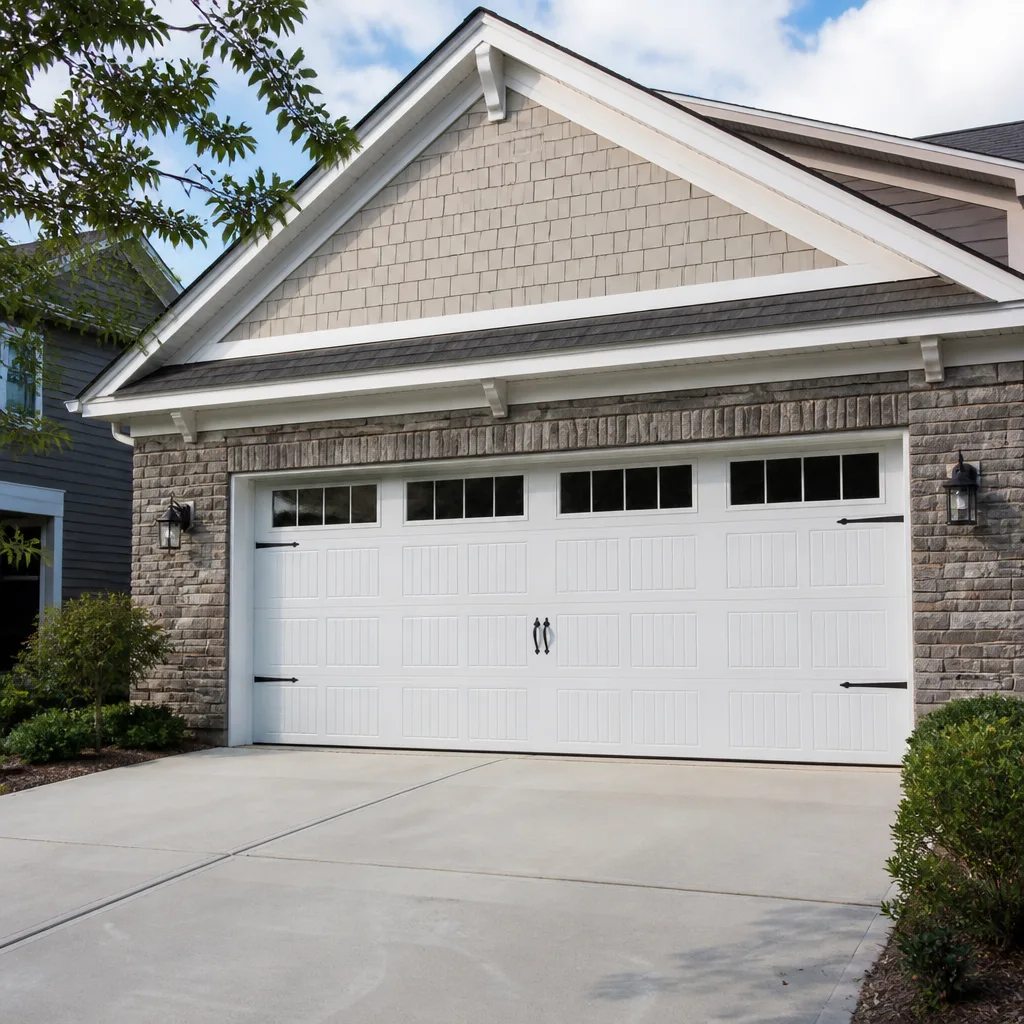
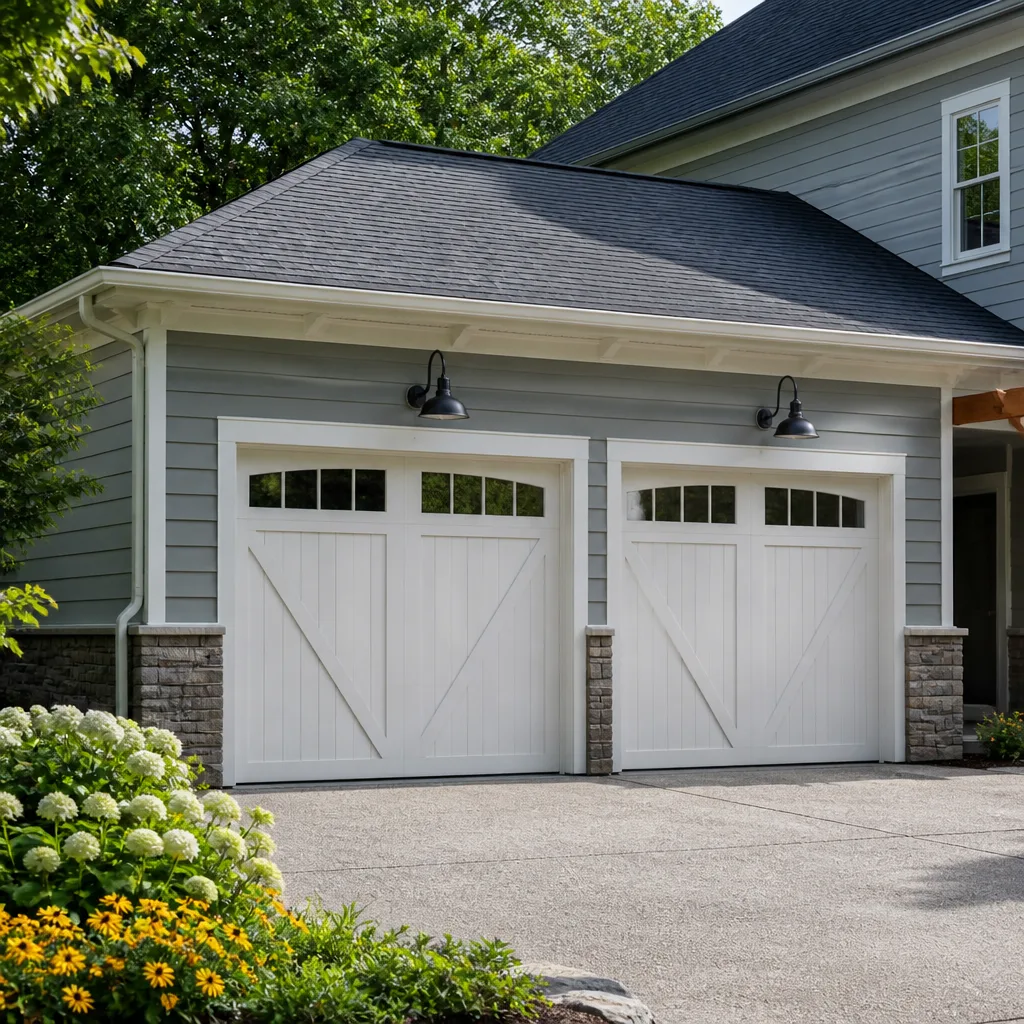 Carriage house
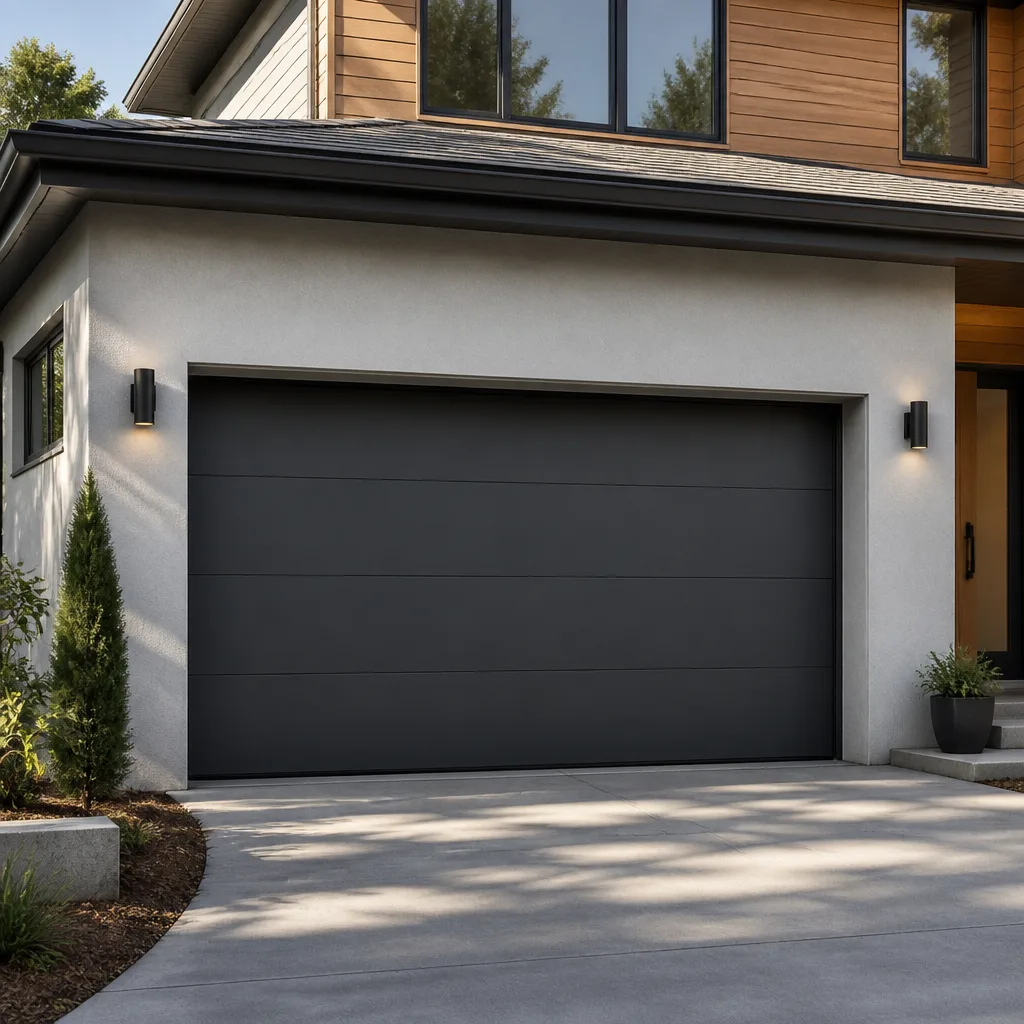 Modern flush
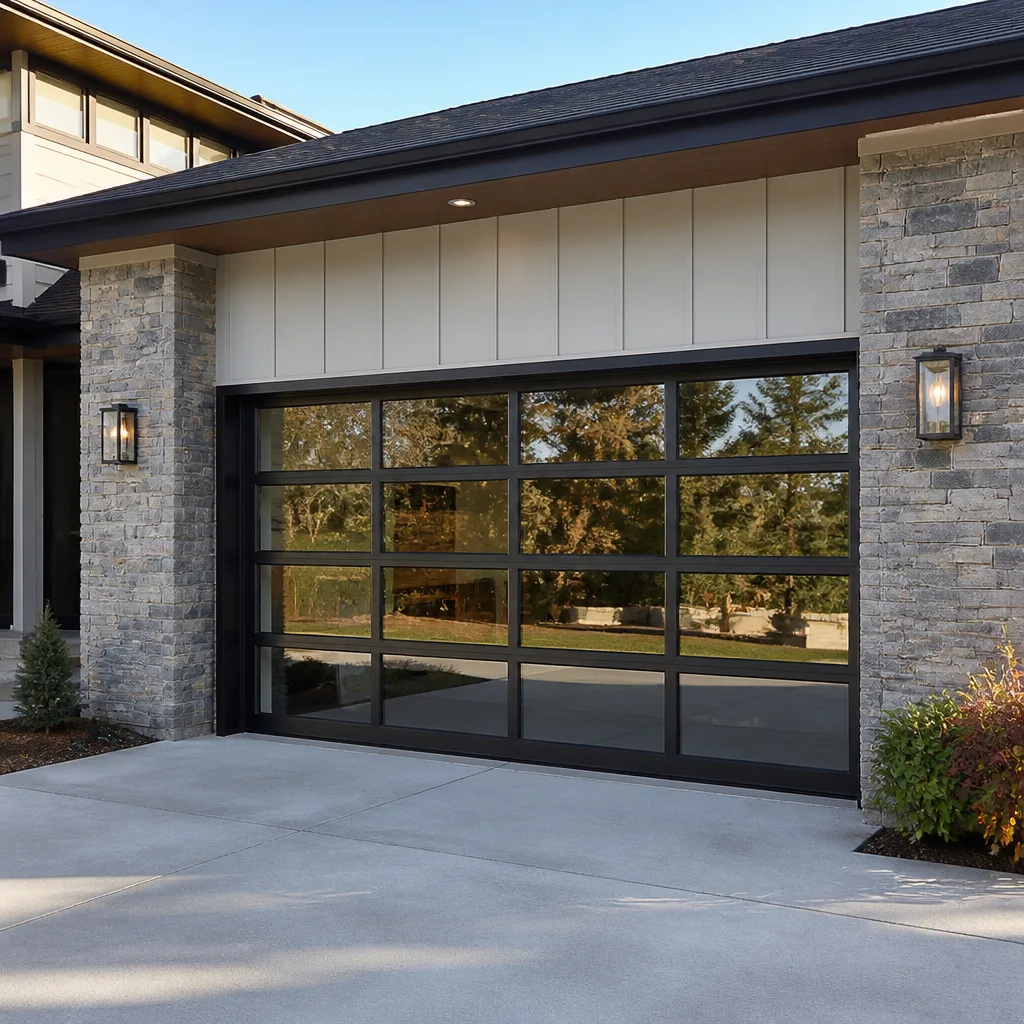 Full-view glass
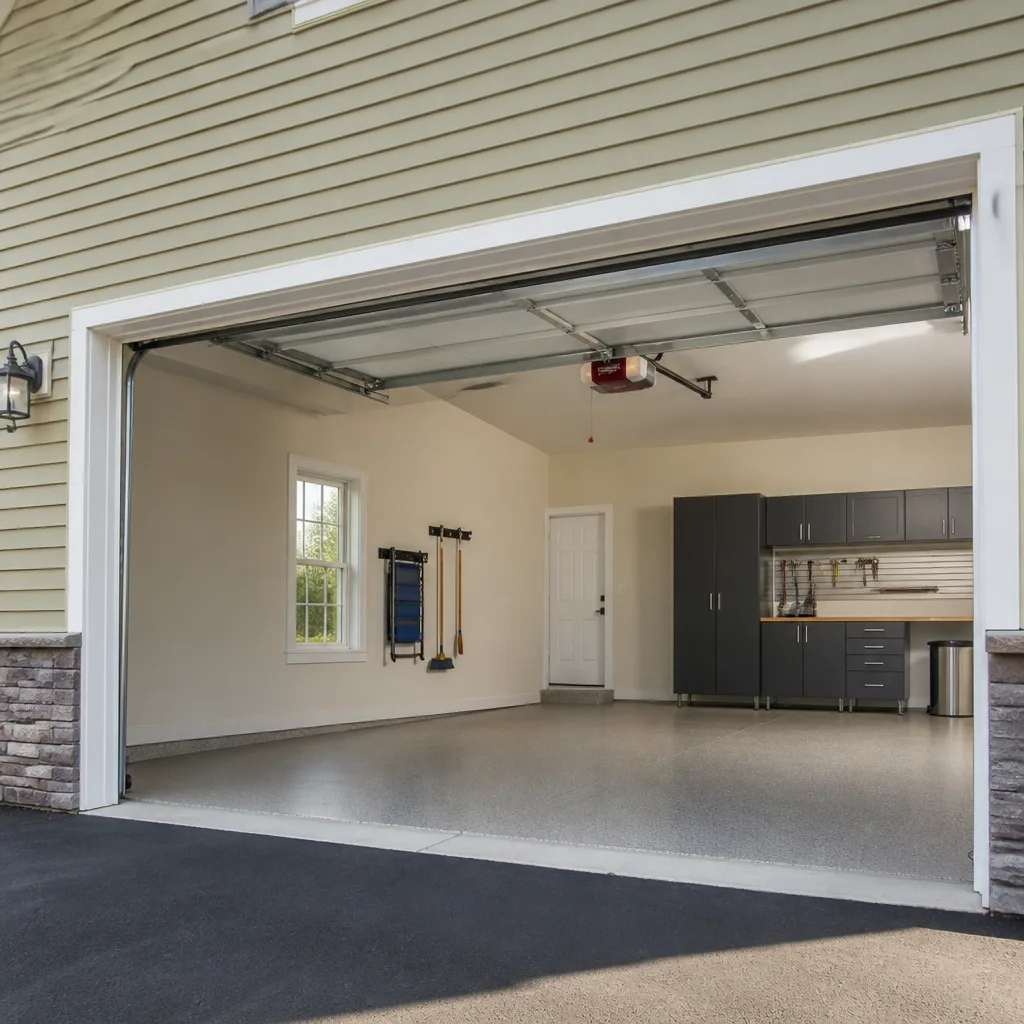 LiftMaster openers
 Chamberlain openers
Full 25-point door and opener safety check with every visit - springs, cables, rollers, tracks, and your LiftMaster or Chamberlain opener included
You get a price before we start. It does not change when the pro arrives.
Get your free estimateGarage Door Emergency Preparedness Guide for Crystal Lake Homes
Here’s the counterintuitive part: when a garage door fails, the door itself is rarely the thing that puts your home at risk. The responses in the first ten minutes do. A spring that snaps at 9 p.m. becomes a car trapped inside and a house left exposed. A power outage during a spring storm becomes a door that won’t budge with no plan for moving it. And a car that tags the bottom panel creates a decision tree almost nobody has rehearsed: tarp it or board it, call the door company or the opener company, wait until morning or move the vehicle that’s now holding up the whole frame. This guide walks through those scenarios in order, from the manual release cord every Crystal Lake homeowner should know to the emergency reference card worth taping to the garage wall. Crystal Lake homes see genuine high-wind events, and knowing what to do before one hits is the difference between a manageable repair and a real headache.
Quick Answer
A garage door emergency in Crystal Lake falls into one of three buckets: storm or impact damage, a power failure, or a mechanical failure (broken spring, snapped cable, jammed opener) that locks a vehicle in or out. Each has a distinct first response, but the shared rule is this: do not force the door, and do not touch high-tension springs or cables. Call Crystal Lake Garage Door Repair Pros at (844) 493-4287 for emergency service. We answer 24/7, with fast dispatch from 7am to 7pm, Sunday through Friday.
Styles & brands we work with
- Raised-panel steel
- Carriage house
- Modern flush
- Full-view glass
- LiftMaster openers
- Chamberlain openers
Table of Contents
- The Three Emergency Scenarios (and Why Each Needs a Different Response)
- The Manual Release Cord: The 90-Second Procedure Most Homeowners Have Never Practiced
- Vehicle Impact: What to Do in the First 30 Minutes
- Wind Load and Door Construction in Crystal Lake
- How to Secure a Compromised Door Overnight
- Power Failure: Opener Brands and Backup Options
- What a Broken Spring Actually Looks Like
- The Emergency Reference Card to Post Inside Your Garage
The Three Emergency Scenarios (and Why Each Needs a Different Response)
When we walk a Crystal Lake homeowner through an emergency, the first question is always the same: what happened? The answer determines everything that follows. Here’s the framework we use.
Scenario 1: Storm or impact damage. A wind gust rips a panel loose, a limb drops on the door, or a vehicle hits it. The immediate goal isn’t to fix the door. It’s to prevent further damage and keep the house secure. If a car is holding the door in an abnormal position, leave the car where it is until a specialist arrives. Moving it can collapse the frame.
Scenario 2: Power failure. The opener is dead, the door is down, and the house is dark. The manual release cord is the tool here, but only if you know what it does and how to pull it correctly. Most openers from LiftMaster, Chamberlain, Craftsman, and Genie use the same basic trolley release, though the release mechanism can sit at different heights and angles.
Scenario 3: Mechanical failure. The door goes up six inches and stops. Or it hangs halfway, off-kilter. Or you find a coiled spring on the floor with a clean break in it. This is the scenario where any attempt to force the door is genuinely dangerous: the spring or cable that should be counterbalancing hundreds of pounds may no longer be doing it, and a door can come down hard.
Each scenario has a “do not do” that matters more than the “do.” For storm damage, do not try to bend panels back into place. For power failure, do not pull the release at an angle. For mechanical failure, do not cycle the door a second time to “see if it clears.” The rest of this guide unpacks each one.
The Manual Release Cord: The 90-Second Procedure Most Homeowners Have Never Practiced
The manual release cord is the first thing you should locate the day you move into a house. When the opener loses power or the door stops responding, this cord disconnects the trolley carriage from the drive chain or belt, letting you lift the door by hand. The procedure takes about ninety seconds and works the same way across LiftMaster, Chamberlain, Genie, Craftsman, Raynor, and Wayne Dalton openers with only small variations.
Before you ever need it, do this in daylight: shut the opener off at the wall panel or breaker, then practice the steps below with the door closed. Then have someone help re-engage the trolley so everything resets. Knowing how it feels when it releases correctly is the whole point.
- Locate the release cord. It hangs from the trolley carriage, on the chain or belt that runs along the ceiling track. It has a red or black plastic handle at the bottom. If you can’t find it, look for the shorter cord tied off to the side – some installers shorten it to keep kids from reaching.
- Stand to the side of the cord, not directly beneath it. If a spring or cable is already compromised, it can go when the tension changes.
- Pull straight down along the cord’s line of travel. This is the critical mistake to avoid: pulling at an angle, especially sideways toward the door or toward the wall. The trolley carriage releases by sliding along the track. A sideways yank can snap the carriage or bend the trolley arm, and that turns a free door into a jammed door.
- Disengage the trolley. You should hear a distinct click and feel the trolley slide free. If it doesn’t release with a firm straight pull, stop. Do not force it.
- Lift the door slowly by hand. A properly balanced door (with intact springs) should lift with about the force of opening a heavy refrigerator door. If it feels like you’re lifting dead weight, the spring has failed. Let the door down and do not attempt to hold it up.
- Propping and re-engaging. If you need the door open and the springs are fine, prop it firmly with a proper door prop or ask someone to hold it. To re-engage the trolley once power is back, raise the door until the carriage meets the trolley, then cycle the opener once to reconnect it. If it doesn’t reconnect, don’t keep cycling it – call us.
One more thing worth saying: if you have a LiftMaster or Chamberlain opener with a wall-mounted release mechanism (some higher-end models use one), the sequence is slightly different. When we come out for garage door opener repair, we’ll walk you through the specific release for your model so you leave knowing what to do.
Vehicle Impact: What to Do in the First 30 Minutes
A car hitting your garage door is disorienting, and the instinct is to back away and start calling. That instinct is right, but the order of the calls matters more than most people realize. Here’s how it should go.
- Stop the vehicle and turn it off. Do not try to back out if the door is pinned against the car or the frame is bent. Moving the car can twist a panel into the opener track and cause more damage.
- Check for people first. Anyone near the door, anyone who was in the garage, anyone whose vehicle was on the other side. This is the only priority for the first minute.
- Look at the door bearings. Is the door still on its tracks? Are the tracks visibly bent or pulled from the wall? Is the door resting on the car or sitting on the ground? Note these details – they save time on the phone.
- Do not cycle the opener. This is the single biggest mistake after vehicle impact. The opener will try to move a door that’s no longer square, and it can pull tracks off the jambs or snap a cable. If the opener is running, shut it off at the wall panel.
- Call the door company first, not the opener company. This is the part that trips people up. The opener isn’t the problem after impact – the door, tracks, and bottom section are. An opener technician on this call wastes a visit. Call Crystal Lake Garage Door Repair Pros at (844) 493-4287 to get a specialist out to assess the door, tracks, and any panel damage together.
- Document everything. Take photos before you move anything, if it’s safe. Not for us – for your records.
The reason we say “door company before opener company” isn’t self-serving; it’s practical. There isn’t a single LiftMaster, Chamberlain, Genie, or Craftsman opener that can function correctly when the door it’s driving is out of alignment. Calling the opener manufacturer’s line first sends you into a support queue before anyone has assessed whether the opener even needs work. When we do garage door repair after a vehicle impact, we always look at the door first and only touch the opener if the mechanism has actually been stressed – which often it hasn’t.
Wind Load and Door Construction in Crystal Lake
Crystal Lake sits in an area where strong thunderstorm wind gusts are a regular seasonal event. The lake doesn’t generate wind, but it does create a genuinely open fetch across the water that any homeowner living near the shoreline knows well. If your door faces open ground or the lake side, wind load is a real consideration, not a theoretical one.
Door construction matters far less than most marketing suggests when the wind is modest, but it matters a lot at higher speeds. Here’s how the main construction types compare in a high-wind event.
- Single-panel, unbraced steel doors. Common on older Crystal Lake homes. They’re straightforward and reliable in normal conditions, but an unbraced single panel deflects more under a gust and can bow, pop a hinge, or lift off its tracks. If yours is unbraced, a stiffening strut across the top section is a modest upgrade that helps.
- Raised-panel steel doors. The most common replacement type. Raised panels add some stiffness compared to flat steel, but the difference is modest unless the door is built to a wind-load rating.
- Flush, insulated panels. Flush panel doors with built-in struts and reinforcing hold up better in wind because the surface is continuous and stiffeners can run the full width. This is the construction type we most often recommend when wind resistance is a priority.
- Wind-load-rated doors. Some Clopay, Amarr, and Wayne Dalton models are rated for specific wind speeds. This is worth asking about at the measure if your door faces open ground.
- Glass and full-view doors. These look great on a lake-facing garage, but individual panes can crack or shatter in debris-driven wind. If yours is glass, know where the shutoffs and manual release are before any storm.
The practical takeaway: if you’re choosing or replacing, a wind-load-rated flush panel with strut reinforcement gives you more margin. If you’re keeping your current door, walking around it after a storm to look for popped hinges, loose track screws, and panel deflection is worth five minutes.
How to Secure a Compromised Door Overnight
Sometimes you can’t get a specialist out before dark, or a part has to be ordered and the door will stay compromised until morning. You still need the house secure overnight. Here’s the sequence that most emergency guides skip.
- Do not force the door closed if it’s off its tracks. If the door is jammed, forcing it into the closed position can drop the whole panel assembly. If it’s stuck open, that’s an overnight security problem you need to solve differently.
- Disconnect the opener. Pull the manual release cord straight down (see the previous section). This prevents anyone from accidentally cycling the opener and either causing injury or making the situation worse.
- Secure the opening from the inside. If the door is open or stuck partway up, you can block the lower half with a heavy object or a vehicle parked directly inside the garage. Then move valuables – tools, bikes, anything visible – further inside the house.
- Use a temporary brace if the door is down but unstable. A 2×4 cut to the width of the door, wedged against the door’s interior at mid-height and braced against the floor, gives you some structural support. This is not a permanent fix and shouldn’t be used as a substitute for a real repair, but it holds the door in position through the night.
- Lock the man door. If your garage has a door from the garage to the house, lock both sides. If your garage has no interior door, lock the entry from the house to the outside and move anything worth stealing away from the garage.
- Write down what you saw. The next morning, describe to us what the door was doing, what noise you heard when it failed, and whether anything changed overnight. That description is often more useful than the visual assessment.
One thing this procedure does not solve: a spring that’s already broken. If the door is unsecured because there’s no spring tension left, band-aiding it overnight only goes so far. Call us. We answer 24/7, and we’ll get you booked into the next available slot, with fast dispatch from 7am to 7pm, Sunday through Friday.
Power Failure: Opener Brands and Backup Options
Power failure during a storm is the most common cause of a stuck door. When the lights go out and the opener dies, the door stays exactly where it was, and depending on the position, that can mean a car trapped inside or a house permanently exposed.
The good news: most modern openers can be run on backup battery, and if yours has one, it’s worth knowing whether it will carry you through a normal outage. Here’s how the major brands we work on handle backup and manual release.
- LiftMaster and Chamberlain. Many recent LiftMaster and Chamberlain openers support battery backup, using a rechargeable pack that kicks in when power drops. If the door is already down and the opener is dead, the manual release cord still applies. We work on both brands routinely.
- Craftsman. Craftsman openers sold under the Sears brand and its later iterations often carry the same battery backup system as Chamberlain, since the mechanisms are closely related. If yours is a Craftsman, the release procedure is essentially the same.
- Genie. Some Genie openers use a battery backup and some rely on manual release only. The release cord works the same way regardless – straight down, no yanking.
- Raynor and Wayne Dalton. Both brands use standard trolley-carriage release mechanisms, though the release cord can be tucked up higher than on other brands. A Wayne Dalton opener with a torque-master style tube is worth a conversation with us if you don’t know how yours operates – the manual release is different enough that a homeowner shouldn’t guess.
If you want to be ready before the next outage, one of the most useful things you can do is confirm whether your opener has a battery backup installed and, if it does, whether the battery still holds a charge. When we do opener work, we’re happy to show you where the battery sits and how to test it.
What a Broken Spring Actually Looks Like
Springs are the most misunderstood part of a garage door, and it’s easy to understand why: they sit above the door, they’re under extreme tension, and the failure is often quiet. A torsion spring breaking sounds like a sharp crack. A tension spring on an older door can snap free and crash against the panel. Either way, what you see after the failure is the same: a clean break, often with a gap of an inch or two in the coil.
A broken spring also changes the door’s behavior in ways you can feel. We’re not going to walk you through repairing one – this is a genuinely dangerous component and one where the wrong move can cause real injury, which is why it’s a dedicated service and not folded into general repair. What we will do is flag the signals that mean you shouldn’t cycle the door a second time.
- The opener runs but the door doesn’t lift. The opener is doing its job; the spring isn’t lifting the door with it. Stop the opener and don’t keep trying.
- The door feels unnaturally heavy when you try to lift it by hand. If a properly maintained door lifts with modest effort, a door with a broken spring feels like dead weight.
- You see a clean break in the coil. A torsion spring above the door or a tension spring along the sides – either way, if there’s a visible gap, the spring has failed.
- The door lands hard when it comes down. A failing spring can still hold partial tension right up until it doesn’t. If the door is slamming the last few inches closed, that’s a sign.
Spring repair is one of our core services for a reason. If a spring has gone, we’ll replace the spring with a matched spring of the same weight rating, not merely one that physically fits. This is what garage door spring repair should always mean, and it’s worth knowing what to ask for. And if you’re not sure whether the spring is broken or the opener is the problem, a call settles it quickly: we can tell from a short description which part is likely at fault and get the right specialist on the next opening.
The Emergency Reference Card to Post Inside Your Garage
Every guide of this kind ends up telling the reader to “be prepared.” Here’s the concrete version: a card, taped to the inside of the garage by the man door, that lists what to do, what not to touch, and who to call, in that order. Write it out, or print it, and post it. Here’s the format we recommend.
What to do:
- If the door stopped while you were trying to open or close it, stop the opener at the wall panel.
- If there’s any damage (impact, storm, a vehicle in contact with the door), leave everything as it is and note what you see.
- If the power is out and you need the door open, use the manual release cord – straight down, not sideways.
- If a spring or cable looks snapped, do not touch the door.
- Call Crystal Lake Garage Door Repair Pros at (844) 493-4287.
What not to touch:
- The torsion spring (the horizontal one above the door) – never adjust it yourself.
- The cables that run along the sides – they’re under tension even when the door looks slack.
- The opener’s adjustment screws – leave the travel limits alone.
- The door panels – don’t try to bend them back into shape.
Who to call, in what order:
- Emergency services, if anyone is hurt or the structure is unsafe to enter.
- The door specialist, for anything involving the door, tracks, panels, springs, or cables. Call (844) 493-4287. We answer 24/7 with fast dispatch from 7am to 7pm, Sunday through Friday.
- The opener company, only after the door itself has been assessed and the opener turns out to be the actual fault.
Post the card where you’ll see it in the dark. On the inside of the garage by the entry door works. So does the wall right next to the opener’s wall panel. Crystal Lake homes with detached garages should consider a second copy inside the house.
Common Mistakes to Avoid
- Yanking the manual release cord sideways. This is the mistake that breaks the trolley carriage on a LiftMaster, Chamberlain, or Craftsman opener. The cord releases by pulling straight down along the track. Any sideways angle bends the carriage and turns a simple power-outage fix into a repair.
- Cycling the opener after impact or a broken spring. When the door is out of alignment or the spring has failed, running the opener makes it worse. It can pull the tracks off the jambs or snap a cable under tension. Shut it off at the wall panel and leave it.
- Calling the opener manufacturer before the door specialist. After a vehicle impact or a storm event, the door and tracks are compromised and the opener is usually not. Calling the opener company first sends you down a support path that won’t address the actual issue.
- Trying to balance or adjust the torsion spring yourself. A torsion spring on a Crystal Lake door can hold hundreds of pounds of tension. This is a dedicated, safety-critical service, and it’s one of the few things in a garage that genuinely shouldn’t be DIY.
- Forcing a stuck door closed and calling it secure. Pushing a jammed door down can cause the whole panel assembly to drop. If the door is genuinely stuck, you need a temporary brace or a blocked opening, not force.
- Assuming any spring that fits will work. Springs are rated to specific door weights. A spring of the wrong rating will wear out faster, put excess load on the opener, and leave the door poorly balanced. When we replace a spring, we match the rating.
- Parking the second car in a compromised garage. If a Crystal Lake storm has left a door bowed or a panel loose, don’t park another vehicle inside until the door has been assessed. Wind, weight, or a small nudge can bring a compromised door down.
See the difference
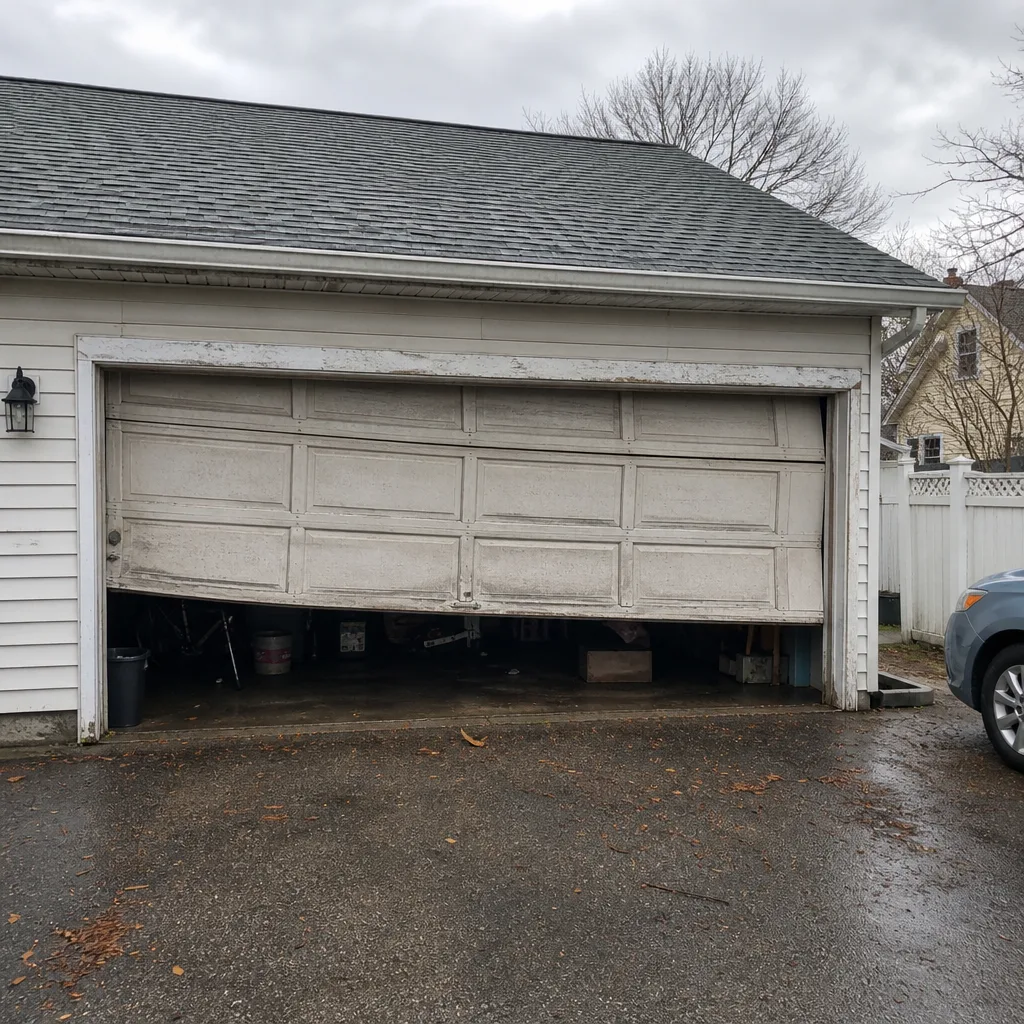 Before
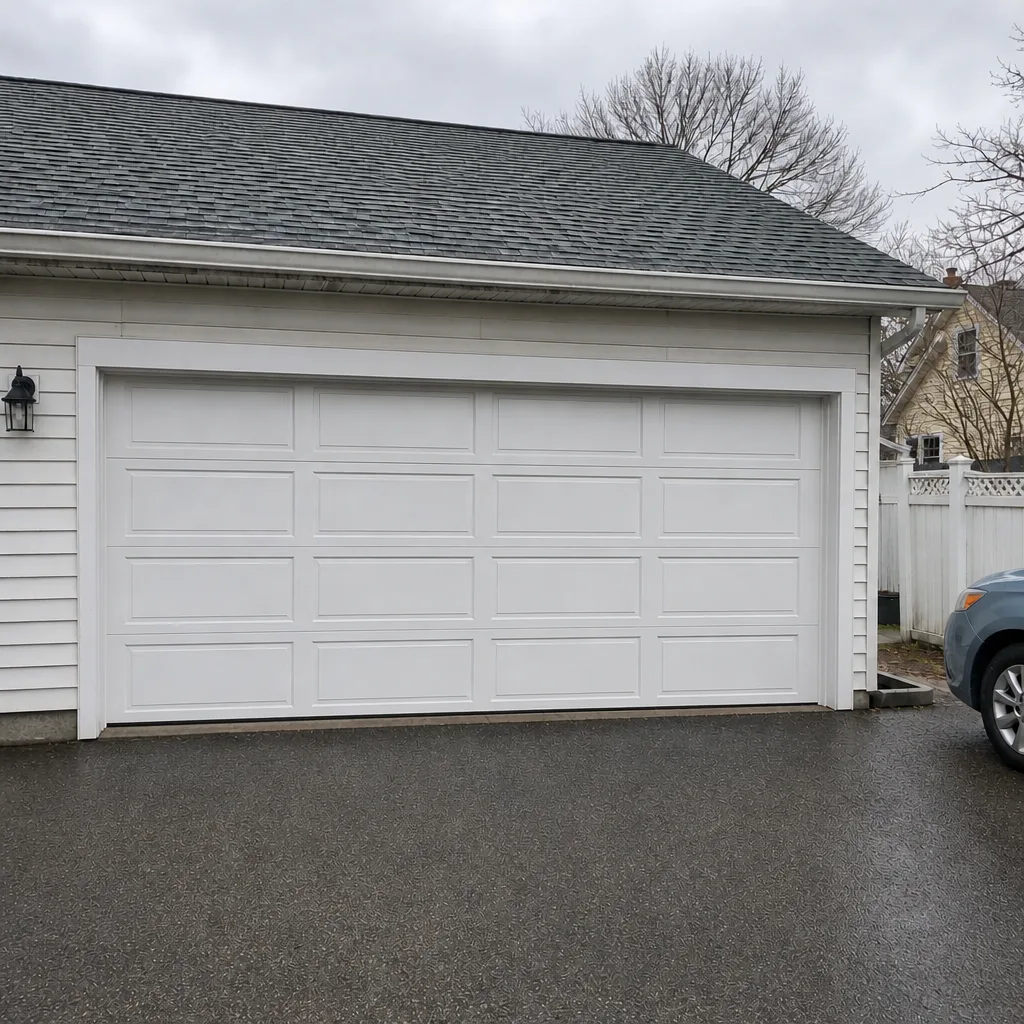 After
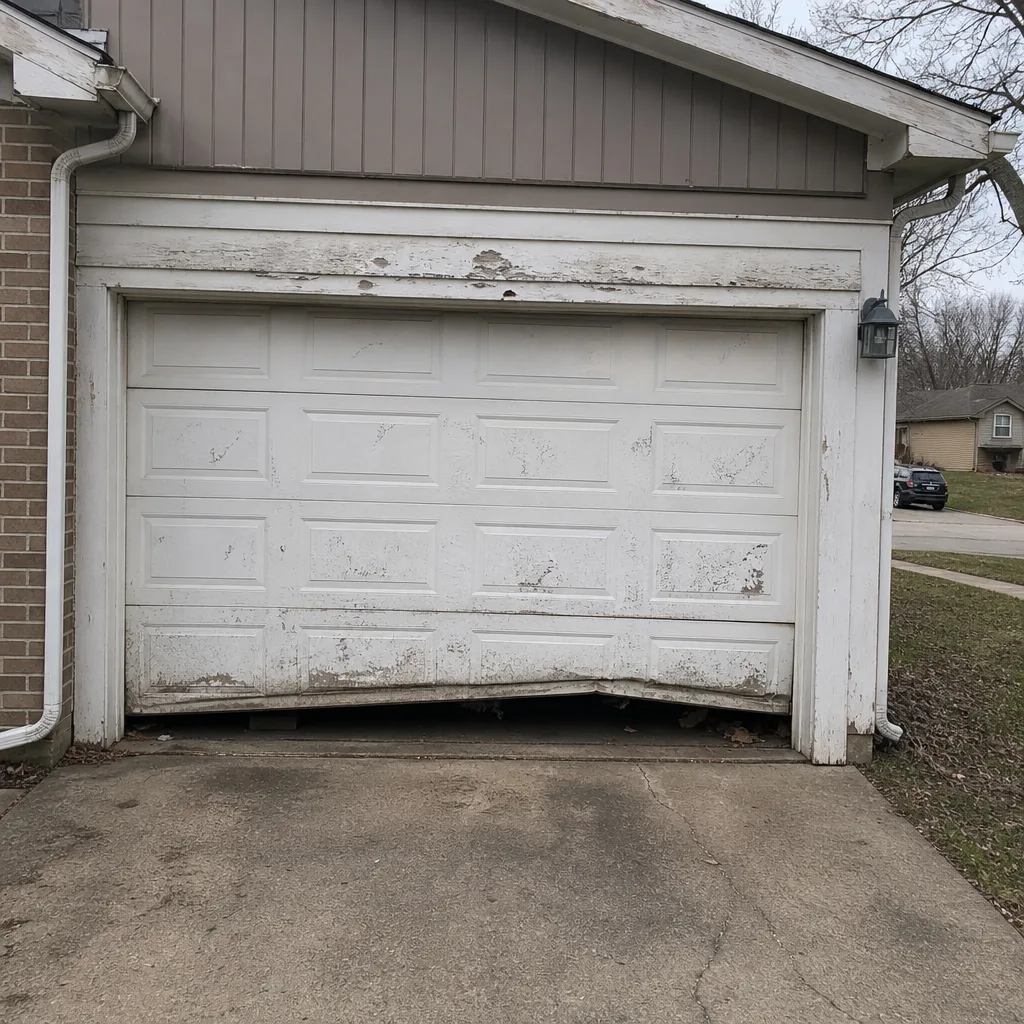 Before
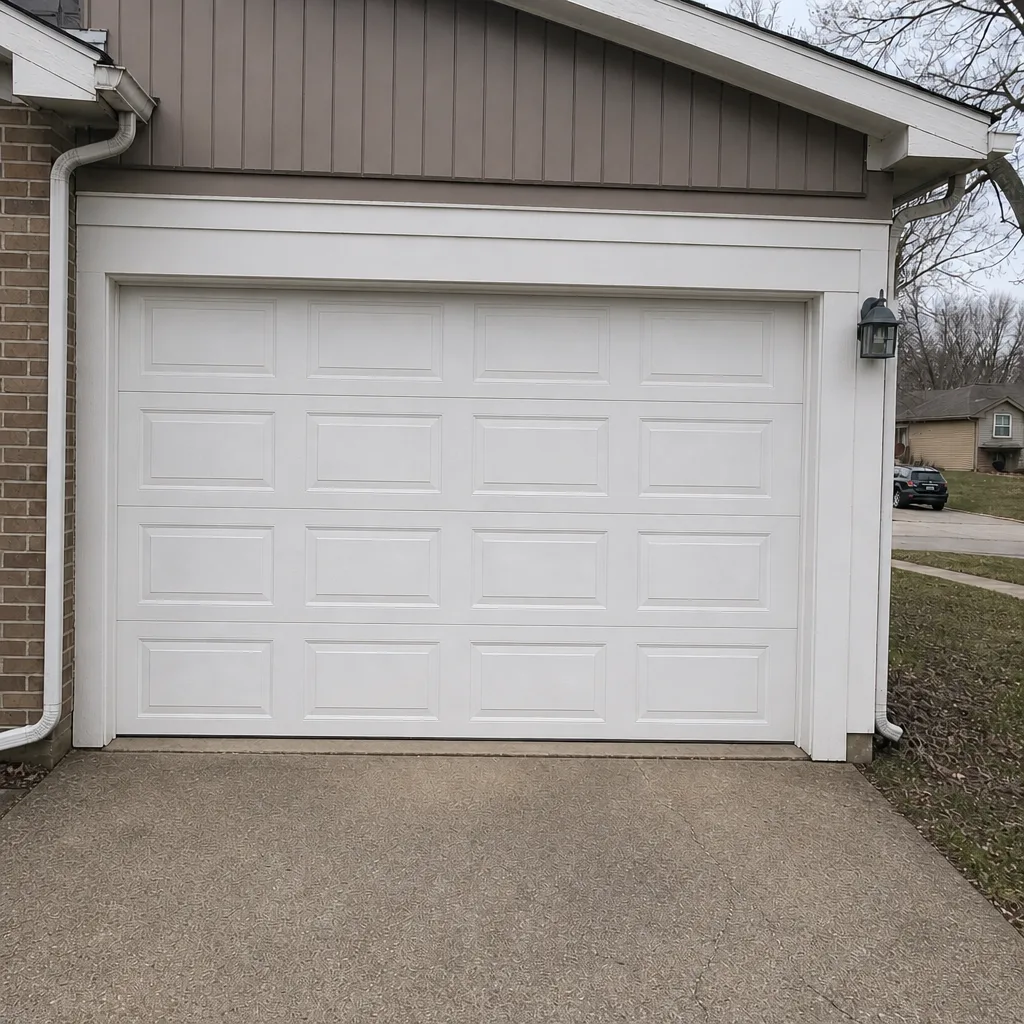 After
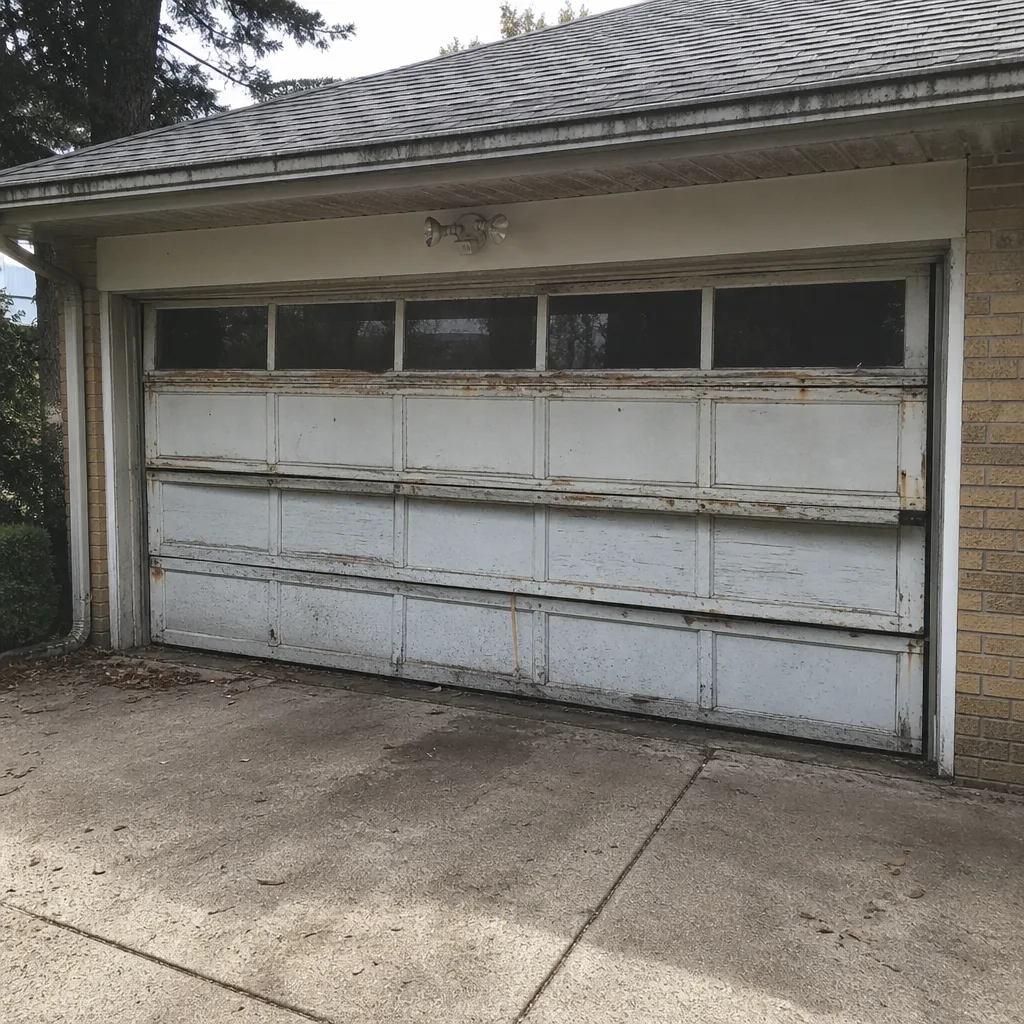 Before
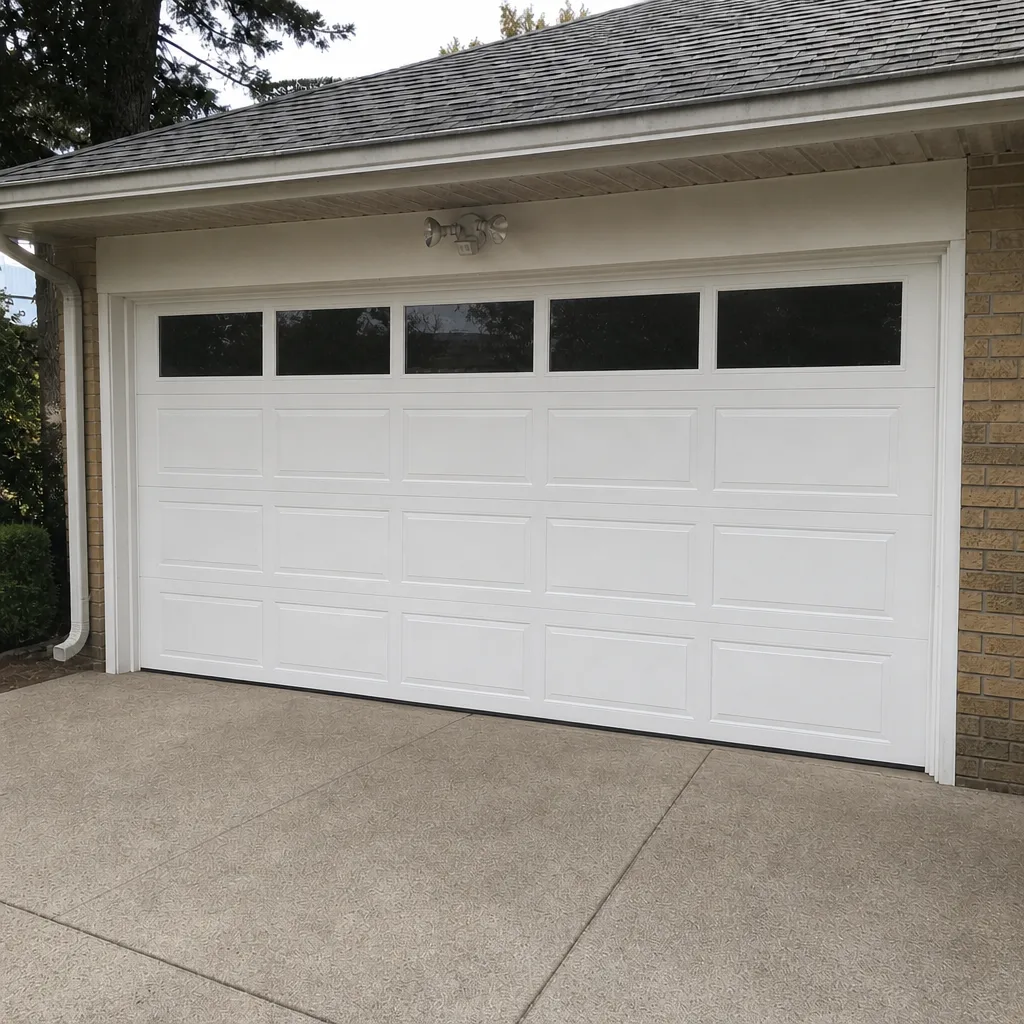 After
When to Call a Professional
Some door emergencies are genuinely urgent – a snapped spring with a car trapped inside, a door that’s come off its tracks, a storm-damaged panel hanging loose. Others are inconvenient but can wait for the next scheduled opening: an opener that’s making noise, a door that’s slightly slower than usual, a hinge that’s started squeaking. The clear “call now” cases are spring failure, cable failure, off-track doors, and any impact damage where the frame or panel looks unstable. We don’t recommend cycling a compromised door while you wait for an appointment. Crystal Lake Garage Door Repair Pros offers free estimates in Crystal Lake – call (844) 493-4287 to get on the schedule. We answer 24/7, with fast dispatch from 7am to 7pm, Sunday through Friday. Our technicians have up to 13 years of experience, and we work on your brand: LiftMaster, Chamberlain, Genie, Clopay, Amarr, Wayne Dalton, Craftsman, and Raynor.
Frequently Asked Questions
Use the manual release cord that hangs from the trolley carriage on the overhead track. Pull it straight down along the track’s line, not sideways, then lift the door by hand. If the door feels like dead weight, the spring may be compromised and you should stop and call (844) 493-4287.
Yes, in most cases. A broken spring means the door is no longer counterbalanced, and lifting or cycling it can cause the door to come down hard. Stop using the opener, don’t attempt to force the door, and call for spring repair. We answer 24/7 and dispatch from 7am to 7pm, Sunday through Friday.
Call the door company first. Impact damage hits the door, tracks, and panels; the opener is usually fine. An opener company on this call may not be able to address the actual issue. Call (844) 493-4287 for a full assessment of the door, tracks, and panels together. Estimates are free.
A wind-load-rated flush panel with strut reinforcement gives you the most margin. Raised-panel steel doors hold up better than unbraced single-panel doors, but the difference is modest unless the door carries a wind-load rating. Ask about it at the measure if your door faces open ground. Call (844) 493-4287 to book a free measure for a replacement.
We can get a specialist out to assess the door and either brace it or set it into a secure position. If the door needs parts, we’ll tell you what to do to secure it in the meantime. Call (844) 493-4287. We answer 24/7, and a call outside dispatch hours is booked into the next opening, Sunday through Friday, 7am to 7pm.
No. We give a written estimate before any work starts, and the written estimate sets the final price. If we find additional issues during the visit, we walk through them and re-quote before continuing, never after. Call (844) 493-4287 for a free estimate.
The Bottom Line
Garage door emergencies in Crystal Lake follow three predictable paths: storm or impact damage, power failure, and mechanical failure. Each one has a different first response, and the most important thing you can do is know the difference before it happens. The manual release cord, used straight down, gets you through a power outage without breaking the trolley carriage. After impact, leave the vehicle where it is and call the door specialist first, not the opener company. If a spring or cable has failed, stop cycling the door and call for spring repair. Emergency services and a written estimate go a long way, and a posted reference card at the garage door costs you nothing. When something goes wrong, we work on your brand – LiftMaster, Chamberlain, Genie, Clopay, Amarr, Wayne Dalton, Craftsman, and Raynor – from broken spring to brand-new door. Call Crystal Lake Garage Door Repair Pros at (844) 493-4287 for a free estimate, and know what to do before your door does something you didn’t plan for. Find our full service page at Crystal Lake Garage Door Repair Pros if you’d like to see the whole range in one place.
Written by the team at Crystal Lake Garage Door Repair Pros.